







What's Happening?
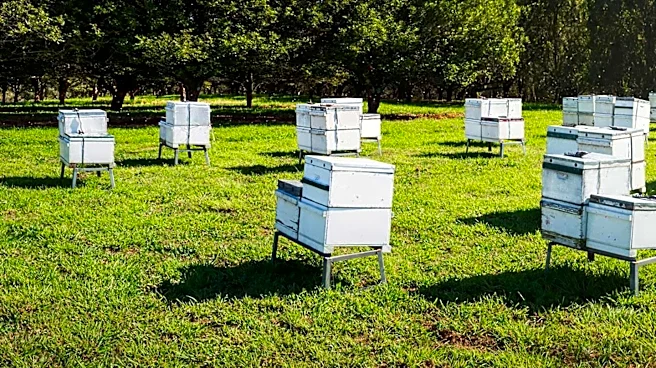
In 1957, 26 African queen honey bees escaped from a Brazilian apiary, leading to the spread of Africanized honey bees across the Americas. These bees, known for their aggressive behavior, have become one of the most notorious invasive species in the region.
The rapid expansion of these bees is attributed to their biological advantages and frequent swarming behavior. Despite their fearsome reputation, their venom is not more potent than that of European bees. The incident originated from an experiment by a Brazilian scientist who defied a dictatorship, inadvertently changing the ecological landscape of the Americas.
Why It's Important?
The spread of Africanized honey bees has significant ecological and economic implications. Their aggressive nature poses a threat to human safety and disrupts local ecosystems by outcompeting native bee populations. This can affect pollination patterns and agricultural productivity, impacting food security and biodiversity. The situation also highlights the unintended consequences of scientific experiments and the importance of careful management and oversight in ecological research. The bees' presence has made Brazil a leading honey producer, demonstrating both the challenges and opportunities presented by invasive species.