





What's Happening?
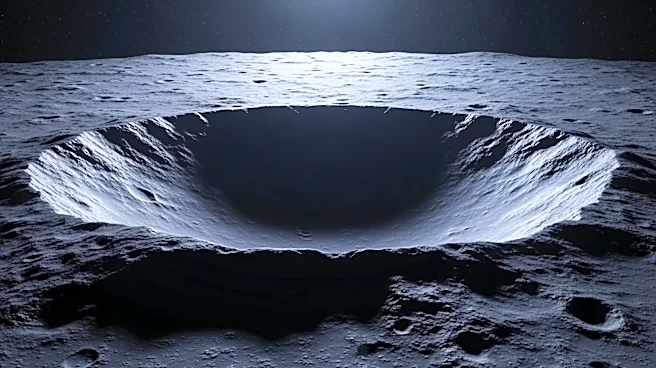
During the Artemis 2 mission, NASA astronauts observed unexpected micrometeorite impacts on the Moon, causing excitement among scientists. As the Orion spacecraft completed its closest approach to the Moon, the crew witnessed several impact flashes, which
are caused by micrometeors hitting the lunar surface. These observations were made possible when the sun was eclipsed by the Moon, allowing the astronauts to see the flashes with their eyes. The mission marks the first human travel to lunar space since Apollo 17 in 1972, and the findings are expected to enhance understanding of the lunar environment.
Why It's Important?
The observation of micrometeorite impacts during the Artemis 2 mission provides valuable data on the dynamics of the lunar environment. Understanding these impacts is crucial for future lunar exploration and the development of technologies to protect spacecraft and astronauts. The mission's success in capturing these events highlights the importance of integrating scientific research with space exploration. It also demonstrates the potential for new discoveries when humans return to lunar space, paving the way for future missions and the eventual establishment of a sustainable human presence on the Moon.
What's Next?
Following the Artemis 2 mission, scientists will analyze the data collected to gain insights into the frequency and impact of micrometeors on the Moon. This information will be vital for planning future lunar missions and developing protective measures for spacecraft and habitats. The success of Artemis 2 may also accelerate plans for subsequent Artemis missions, which aim to establish a long-term human presence on the Moon and serve as a stepping stone for future exploration of Mars.