






What's Happening?
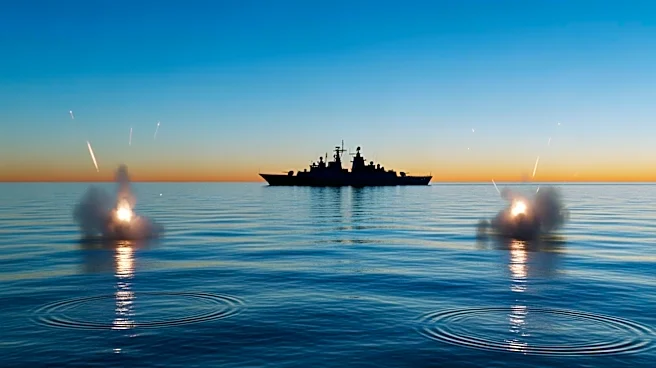
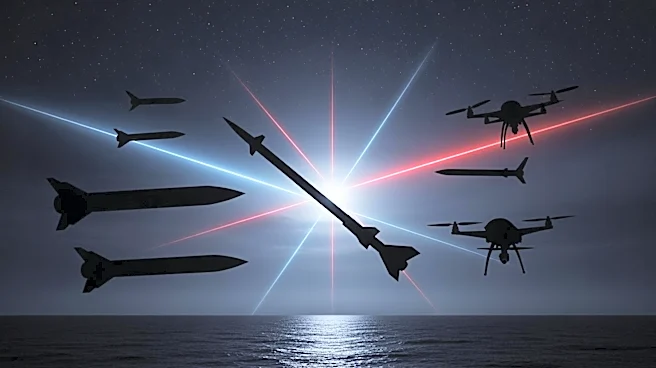
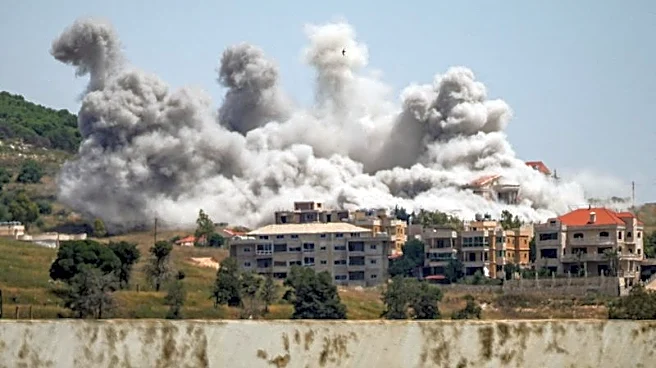
Bahrain's government reported that Iran launched ballistic missiles and drones towards Bahrain and Kuwait, which were intercepted. The U.S. military confirmed the interception of these missiles and drones, which were aimed at the Strait of Hormuz and Gulf
Arab allies. This incident is part of ongoing tensions between the U.S. and Iran, with the U.S. enforcing a blockade on Iranian ports in response to Iran's control over crucial maritime corridors. The U.S. Central Command stated that the Iranian drones posed an immediate threat to regional maritime traffic. The situation has further strained the ceasefire between the U.S. and Iran, with President Trump indicating that the U.S. is seeking a resolution to the conflict, either through diplomatic means or more forceful measures.
Why It's Important?
The interception of Iranian missiles and drones by U.S. forces highlights the ongoing geopolitical tensions in the Gulf region, which have significant implications for global oil and natural gas shipments. The Strait of Hormuz is a critical corridor for these resources, and any disruption can lead to spikes in energy prices, affecting global markets. The U.S. blockade and military actions are part of broader efforts to pressure Iran into negotiations, which could impact international relations and economic stability. The situation also poses political challenges for President Trump, as it affects domestic energy prices and has implications for U.S. foreign policy ahead of midterm elections.
What's Next?
The U.S. and Iran are engaged in tentative negotiations to extend a ceasefire and address Iran's nuclear program. However, the recent military exchanges could jeopardize these talks. The U.S. is likely to continue its military presence in the region to deter further Iranian aggression, while diplomatic efforts may focus on securing a more stable truce. The international community will be watching closely, as any escalation could have widespread economic and political repercussions.