
What's Happening?
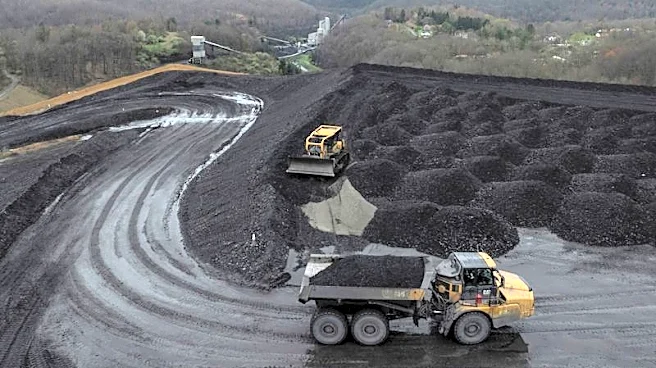
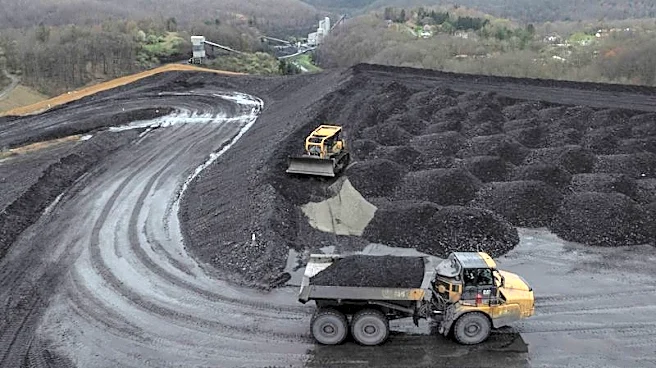
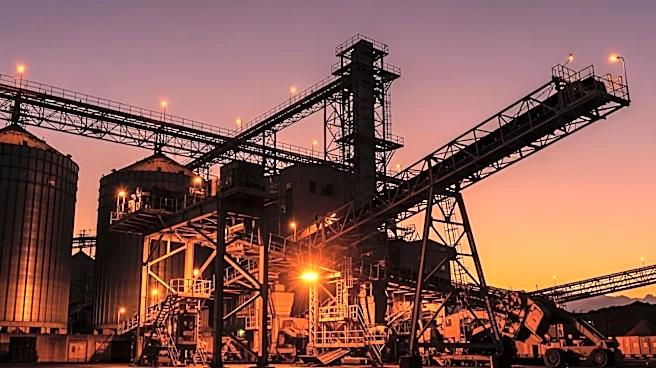
President Trump announced the use of the Defense Production Act to direct a $700 million investment into the coal industry. This initiative includes the construction of a new coal export terminal on the West
Coast, specifically in Oakland, California. The plan also involves upgrading 13 existing coal plants across the United States, building two new plants in Alaska and West Virginia, and restarting a shuttered plant in Maryland. Trump emphasized the move as a measure to reduce energy costs and bolster national security, citing the rising energy demands from artificial intelligence data centers. The announcement revives a long-standing debate over coal export facilities on the West Coast, which have faced opposition due to environmental concerns.
Why It's Important?
The decision to invest heavily in coal has significant implications for U.S. energy policy and environmental strategy. While the administration argues that coal is essential for national security and reducing energy costs, critics highlight the environmental and economic drawbacks. Coal is a major contributor to air pollution and climate change, and many argue that renewable energy sources are more cost-effective. The investment could lead to increased electricity prices and environmental degradation, particularly affecting communities near the new export terminal. This move also signals a shift away from renewable energy investments, potentially impacting the U.S.'s ability to meet climate goals and transition to cleaner energy sources.
What's Next?
The construction of the new coal export terminal is set to begin this summer, with completion expected by 2028. This development is likely to face legal and public opposition from environmental groups and local communities concerned about pollution and climate impacts. The administration's focus on coal may also influence future energy policies and regulatory decisions, potentially affecting the balance between fossil fuels and renewable energy investments. Stakeholders in the energy sector, including renewable energy advocates and coal industry supporters, will likely continue to debate the merits and consequences of this policy shift.
Beyond the Headlines
The broader implications of this investment extend to international energy markets, as the new terminal aims to export coal to Asia. This could affect global coal prices and trade dynamics. Domestically, the decision may exacerbate tensions between federal and state governments, particularly in states like California that prioritize renewable energy. The move also raises questions about the long-term sustainability of relying on coal, given its environmental impact and the global shift towards cleaner energy sources. The administration's stance may influence public opinion and voter priorities in upcoming elections, as energy costs and environmental concerns remain key issues.