
What's Happening?
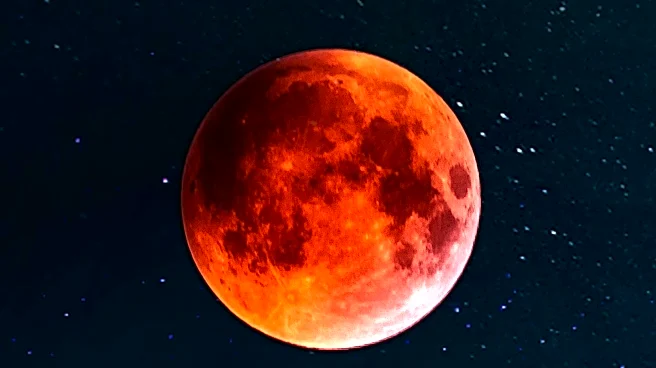
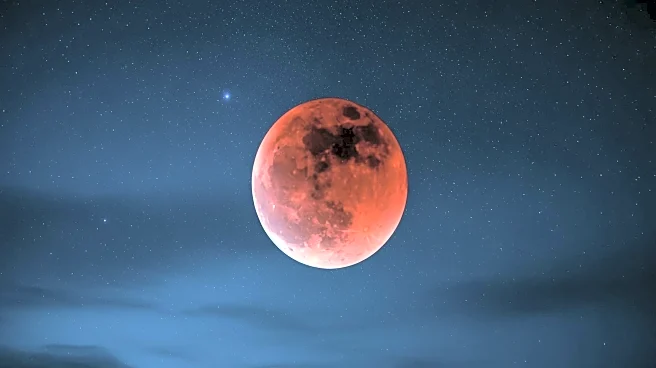
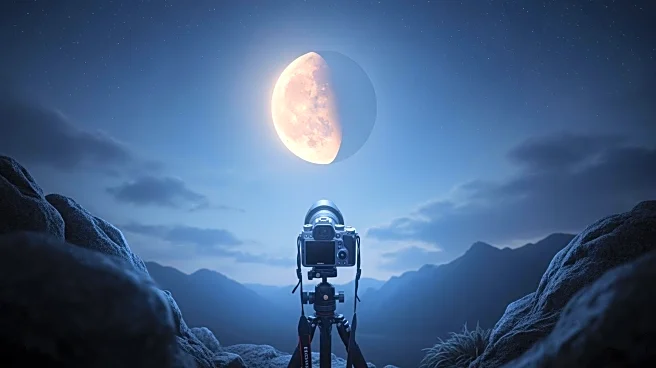
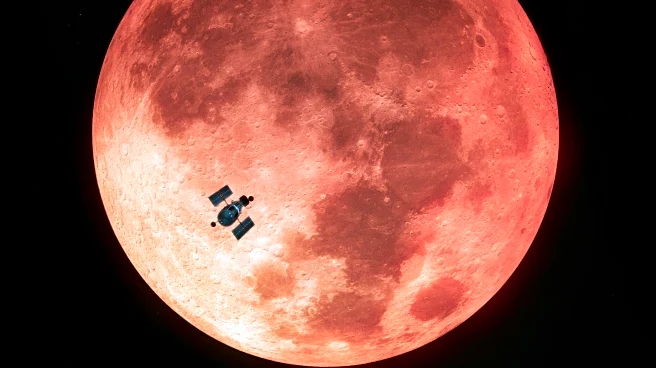
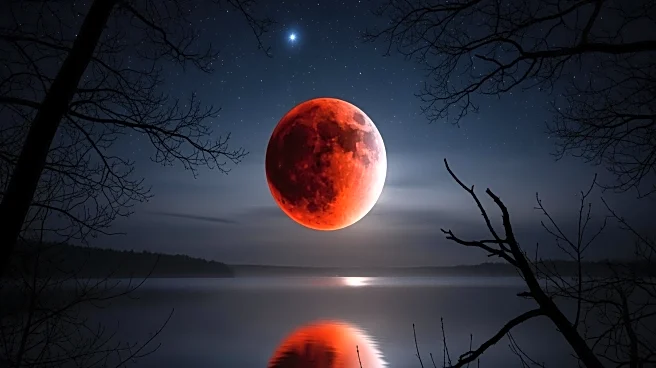
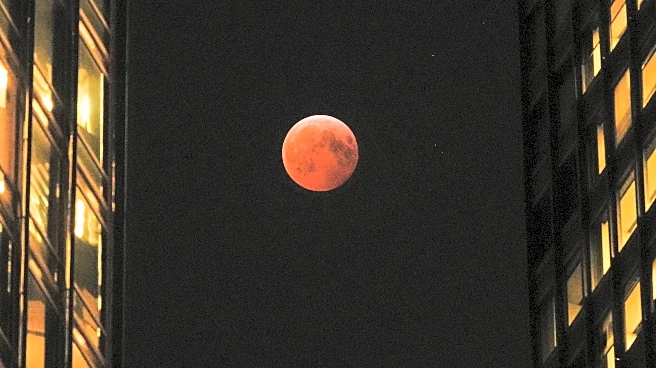
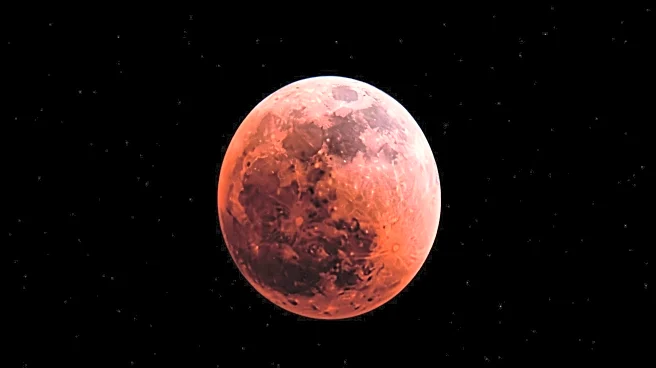
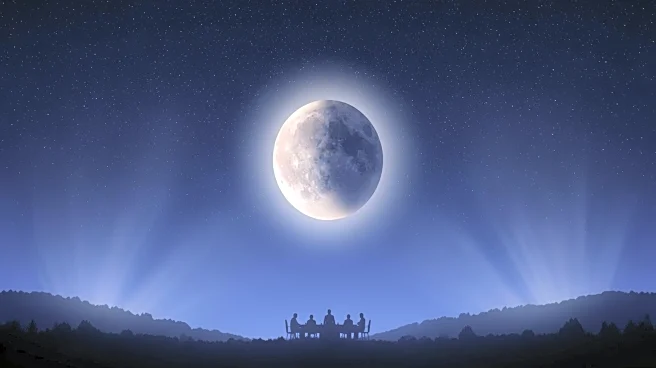
A total lunar eclipse is set to occur on March 3, 2026, creating a dramatic 'blood moon' visible to billions across North America, Australia, and East Asia. During this event, the moon will be fully immersed in Earth's umbral shadow, turning a reddish
hue. The eclipse will begin at 6:04 a.m. EST and reach its peak at 6:33 a.m. EST, lasting for approximately 58 minutes. Over 40% of the world's population will have the opportunity to witness at least part of the total phase of the eclipse. This will be the last total lunar eclipse visible from Earth until the end of 2028.
Why It's Important?
The total lunar eclipse is significant as it offers a rare astronomical event that can be observed without special equipment, unlike solar eclipses. It provides an opportunity for educational engagement and public interest in astronomy. The event is also culturally significant, as lunar eclipses have been historically associated with various myths and interpretations. For scientists, it offers a chance to study the Earth's atmosphere based on the light refracted onto the moon's surface.
What's Next?
Following this eclipse, the next total lunar eclipse will not occur until New Year's Eve 2028-2029. In the meantime, astronomers and enthusiasts will continue to observe other celestial events, such as meteor showers and planetary alignments. The eclipse will be streamed online for those unable to view it in person, ensuring global accessibility.