






What's Happening?
The U.S. Navy is actively seeking to enhance its capabilities in suppressing and neutralizing enemy air defenses by increasing the production of next-generation anti-radar missiles. A recent Request For Information (RFI) from the Naval Air Systems Command
indicates a need for up to 600 Advanced Emission Suppression Missiles annually. This demand has doubled from a previous estimate of 300 units per year, reflecting the Navy's growing appetite for these weapons. The RFI specifies a requirement for a 'mature design' at technological readiness stage 6, which is a fully functional prototype stage. The Navy aims to acquire a weapon system with extended range, advanced targeting, and integration capabilities with existing and future platforms. This initiative comes in the wake of the Iran War and a subsequent shortage of guided missiles, highlighting the strategic importance of these systems.
Why It's Important?
The increased demand for anti-radar missiles underscores the U.S. Navy's strategic focus on maintaining air superiority in contested environments. By enhancing its missile capabilities, the Navy aims to effectively counter modern and advanced radar systems, which are critical in modern warfare. This move is significant for defense contractors and the broader defense industry, as it opens up opportunities for companies capable of meeting the Navy's stringent requirements. The initiative also reflects a broader trend of military modernization and readiness in response to evolving global threats. The development and production of these advanced missiles could have substantial economic implications, potentially leading to job creation and technological advancements within the defense sector.
What's Next?
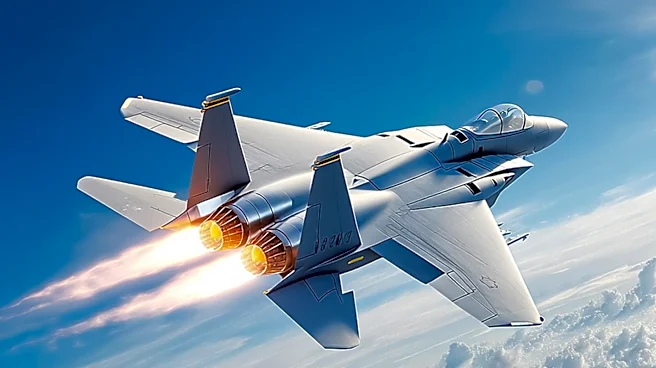
The Navy's RFI is likely to prompt responses from major defense contractors interested in participating in the production of these advanced missiles. Companies will need to demonstrate their capability to meet the Navy's requirements, including the ability to produce a mature design with the specified technological readiness. The Navy's focus on integrating these missiles with platforms like the F/A-18 E/F, EA-18G, and F-35 suggests ongoing collaboration with aircraft manufacturers to ensure compatibility and effectiveness. As the Navy evaluates responses, it may lead to further contracts and partnerships aimed at accelerating the development and deployment of these critical defense systems.