


What's Happening?
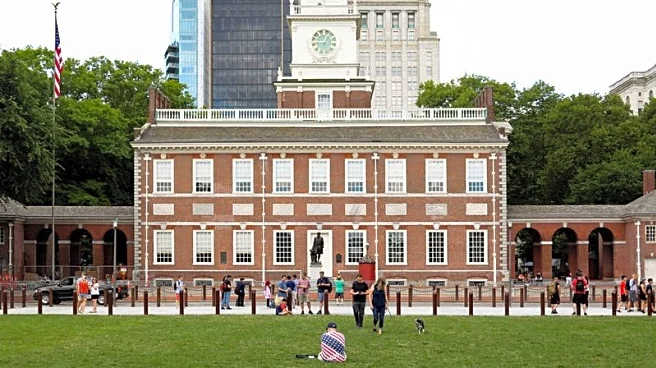
A federal judge has mandated the restoration of an exhibit about nine enslaved individuals at George Washington's former home in Philadelphia. This decision follows the removal of the exhibit by the Trump administration, which was part of an executive
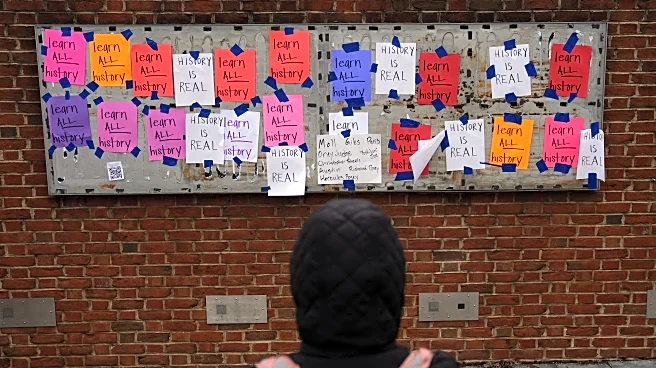
order aimed at 'restoring truth and sanity to American history.' The order directed the Interior Department to ensure that national sites do not display elements that 'inappropriately disparage Americans past or living.' The city of Philadelphia sued after the National Park Service took down the explanatory panels at Independence National Historical Park. U.S. District Judge Cynthia Rufe, appointed by President George W. Bush, ruled that the materials must be restored in their original condition while the lawsuit challenging the removal's legality proceeds. The judge criticized the administration's actions, likening them to the revisionist practices depicted in George Orwell's '1984.'
Why It's Important?
The judge's ruling underscores the ongoing debate over how American history is presented and interpreted at national sites. The decision is significant as it challenges the Trump administration's approach to historical narratives, particularly those involving slavery and marginalized groups. The restoration of the exhibit is a victory for those advocating for a comprehensive and truthful representation of history, including the experiences of enslaved people. This case highlights the tension between federal authority and local interests in preserving historical accuracy. The outcome could influence future policies on how historical sites are managed and the narratives they present, impacting educational and cultural understanding across the nation.
What's Next?
The Interior Department has the option to appeal the ruling, which could prolong the legal battle over the exhibit's removal. Meanwhile, the restoration of the exhibit will proceed as ordered by the court. The case may prompt other cities and historical sites to review and potentially challenge federal decisions that alter historical narratives. The broader implications could lead to increased scrutiny of executive orders affecting cultural and historical sites, potentially influencing future administrations' policies. Stakeholders, including historians, educators, and civil rights groups, are likely to continue advocating for the preservation of comprehensive historical narratives.
Beyond the Headlines
The case raises important questions about the role of government in shaping historical narratives and the ethical implications of altering or omitting parts of history. It highlights the potential for political influence to impact public understanding of historical events. The decision may encourage a broader dialogue about the importance of preserving diverse perspectives in historical storytelling, particularly those of marginalized communities. This could lead to a reevaluation of how history is taught and commemorated in public spaces, fostering a more inclusive approach to national heritage.