
What's Happening?
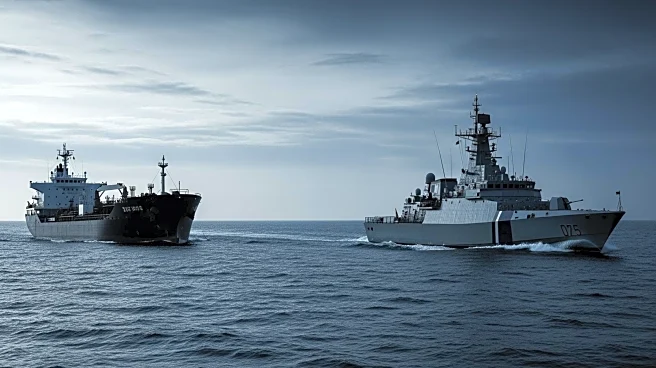
Danish forces collaborated with the United States in intercepting a tanker in the Atlantic Ocean, despite ongoing tensions between Denmark and the U.S. over President Trump's interest in acquiring Greenland.
The tanker was intercepted for violating U.S. sanctions, as reported by an unnamed Danish government official. This operation is part of a broader U.S. effort to enforce a blockade around Venezuela, targeting vessels that breach sanctions. The interception comes at a time when President Trump has been vocal about the strategic importance of Greenland for U.S. military operations, a stance that has raised concerns among European leaders about the potential impact on NATO. A bill has been introduced in Congress to expedite the acquisition of Greenland, further intensifying the debate.
Why It's Important?
The interception highlights the complex geopolitical dynamics involving the U.S., Denmark, and Greenland. President Trump's interest in Greenland is driven by its strategic location and natural resources, which are seen as vital for national security, particularly in countering Russian and Chinese influence in the Arctic. However, this has sparked fears among NATO allies about the implications for the alliance's cohesion. The operation underscores the U.S.'s commitment to enforcing sanctions and maintaining a strong military presence in strategic regions. The involvement of Danish forces indicates a level of cooperation despite diplomatic strains, reflecting the intricate balance of international relations in the Arctic.
What's Next?
Upcoming discussions in Washington between U.S., Danish, and Greenlandic officials will be crucial in determining the future of U.S.-Greenland relations. These talks are expected to address security concerns and the potential for U.S. control over Greenland. The outcome could influence NATO's strategic posture and the broader geopolitical landscape in the Arctic. Observers will be watching closely for any shifts in policy or rhetoric that could impact international alliances and regional stability.
Beyond the Headlines
The situation raises ethical and cultural questions about the sovereignty of Greenland and the rights of its people. Greenlandic leaders have expressed a desire for autonomy, emphasizing their identity separate from both Denmark and the U.S. The potential acquisition of Greenland by the U.S. could set a precedent for how powerful nations engage with smaller, strategically important territories. This development also highlights the growing importance of the Arctic in global geopolitics, as climate change opens new shipping routes and access to resources.