





What's Happening?
A new study published in Science Advances, led by the Potsdam Institute for Climate Impact Research (PIK) and the International Institute for Applied Systems Analysis (IIASA), has identified a previously misunderstood self-reinforcing interaction that
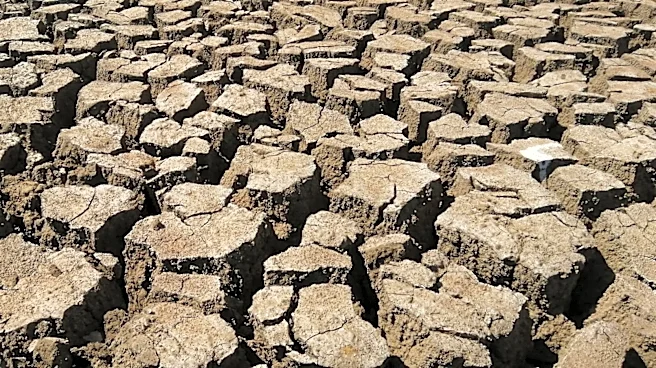
makes extreme heatwaves 10 percent hotter. This interaction involves temperature, soil moisture, and atmospheric pressure. Researchers used machine learning and statistical analysis to discover that in mid-latitude regions, including parts of North America, these three factors begin to interact and drive each other further once a certain temperature threshold is reached. This phenomenon contributes to 'mega heatwaves' that have significantly surpassed previous temperature records. For instance, the 2021 summer heatwave in the U.S. Pacific Northwest saw temperatures reach 4.6°C above prior records. The study explains that high-pressure systems increase solar radiation, while rising temperatures dry out soils, reducing evaporative cooling. These two-way relationships were already understood, but the new research highlights a critical three-way interaction that intensifies the most extreme heat events.
Why It's Important?
This research is crucial because it indicates that current climate models may be underestimating the severity of future heatwave risks. The self-reinforcing dynamic identified is not well-represented in existing models, meaning projections for extreme heat events might be less severe than what could actually occur. For the U.S., particularly in regions prone to extreme heat like the Pacific Northwest, this implies a need for re-evaluation of climate adaptation strategies and public health preparedness. More intense and prolonged heatwaves can lead to increased mortality, strain on infrastructure (e.g., power grids), agricultural losses, and economic disruption. Understanding this interaction is vital for policymakers, urban planners, and emergency services to develop more robust responses to extreme heat, protecting vulnerable populations and critical systems from potentially more devastating impacts than previously anticipated.
What's Next?
The findings suggest an urgent need for climate scientists to incorporate this newly identified self-reinforcing dynamic into future climate models. This integration would allow for more accurate forecasts of extreme heat events, providing better data for risk assessment and mitigation planning. Policymakers and government agencies in the U.S. may need to review and update their climate resilience plans, considering the potential for more severe heatwaves. This could involve investing in infrastructure upgrades, developing more effective early warning systems, and implementing public health interventions tailored to higher temperature extremes. Further research will likely focus on refining the understanding of these interactions and their regional variations, which could lead to more localized and precise heatwave predictions and preparedness strategies.
Beyond the Headlines
The study's implications extend beyond immediate forecasting, touching upon the broader ethical and societal challenges of climate change. If the most extreme heat events are becoming even hotter due to these complex interactions, it underscores the urgency of global efforts to reduce greenhouse gas emissions. The disproportionate impact of extreme heat on vulnerable communities, including the elderly, low-income populations, and outdoor workers, highlights issues of environmental justice. The findings also prompt a deeper look into how human activities, by warming the planet, are triggering previously unobserved or underestimated natural feedback loops that accelerate climate impacts. This could lead to a re-evaluation of climate policy targets and a greater emphasis on both mitigation and adaptation strategies to cope with a potentially more extreme future climate.