







What's Happening?
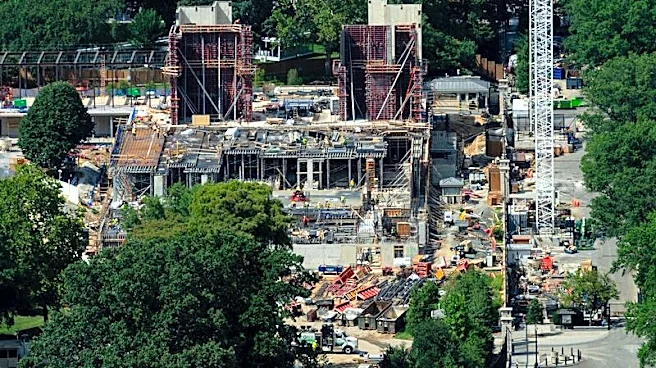
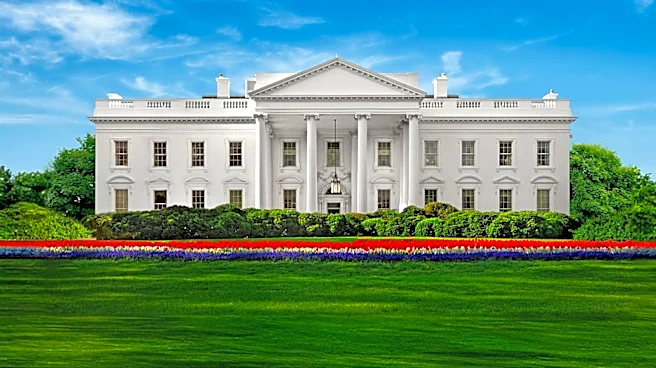
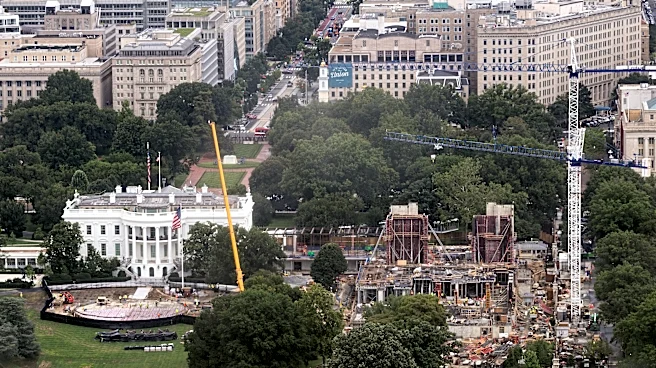
A federal appeals court has ruled that President Trump's administration must cease construction of a $400 million White House ballroom until Congress approves the project. The decision, made by a three-judge panel from the U.S. Court of Appeals for the District
of Columbia Circuit, comes after the National Trust for Historic Preservation sued to stop the construction. The court's 2-1 decision emphasized that the construction of such a significant structure requires congressional authorization, as per constitutional and legal requirements. President Trump has expressed his intention to appeal the decision to the U.S. Supreme Court, arguing that the project is essential for national security and does not require congressional approval since it is not funded by public money.
Why It's Important?
The ruling underscores the constitutional checks and balances between the executive branch and Congress, particularly regarding significant structural changes to federal properties like the White House. The decision highlights the ongoing tension between President Trump's administration and preservationists concerned about maintaining the historical integrity of national landmarks. The case also raises questions about the use of private funds for public projects and the extent of executive power in bypassing congressional oversight. The outcome of this legal battle could set a precedent for future administrations regarding the modification of historic federal properties.
What's Next?
The Trump administration plans to appeal the ruling to the U.S. Supreme Court. If the appeal is accepted, the Supreme Court's decision could have far-reaching implications for executive authority and the role of Congress in approving significant federal projects. Meanwhile, the National Trust for Historic Preservation and other stakeholders will likely continue to advocate for the protection of historic sites. The administration's argument that the ballroom is necessary for national security may also prompt further debate on the balance between security needs and historical preservation.