







What's Happening?
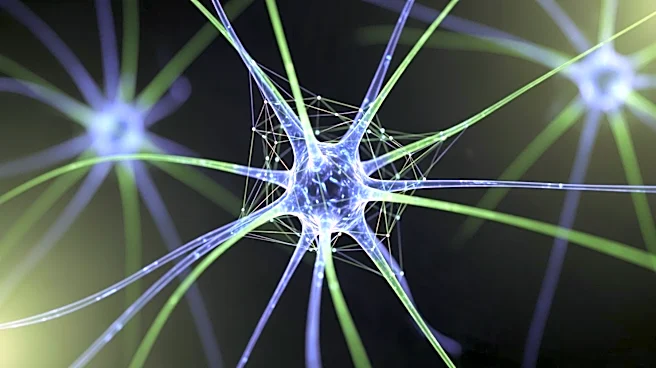
Neuroscientist Paul Nuyujukian from Stanford University is pioneering research that focuses on understanding brain diseases by studying individual neurons. His work is particularly relevant to stroke recovery, a significant global health issue. The World
Health Organization estimates that one in four adults will experience a stroke in their lifetime, which can result in death, paralysis, or speech problems. Despite the prevalence of strokes, much remains unknown about how the brain recovers from such events. Nuyujukian's research aims to fill this gap by examining how the brain controls movement post-stroke. By analyzing neurons one at a time, he hopes to gain insights that could eventually help people who have been paralyzed.
Why It's Important?
This research is crucial as it addresses a major health concern affecting millions worldwide. Understanding the brain's recovery process after a stroke could lead to significant advancements in medical treatments and rehabilitation strategies. If successful, Nuyujukian's work could improve the quality of life for stroke survivors by enhancing their recovery prospects. This could also reduce the long-term healthcare costs associated with stroke-related disabilities. The potential to aid those who have been paralyzed underscores the transformative impact this research could have on public health and medical science.
What's Next?
As Nuyujukian continues his research, the next steps involve further exploration of neuron interactions and their role in brain recovery. This could lead to the development of new therapeutic techniques or technologies aimed at improving motor function in stroke patients. Collaboration with other neuroscientists and medical professionals will be essential to translate these findings into practical applications. Additionally, public and private funding will be crucial to support ongoing research efforts and potential clinical trials.