



What's Happening?
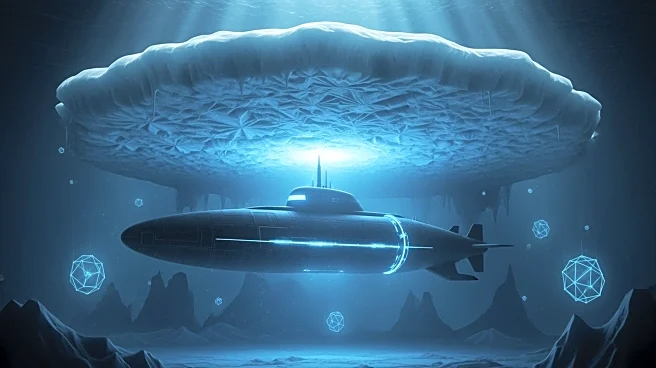
An unmanned submarine named Ran, operated by a team led by Professor Anna Wåhlin from the University of Gothenburg, has discovered unusual under-ice structures beneath West Antarctica's Dotson Ice Shelf. The submarine, which is an autonomous underwater
vehicle, was mapping the ice shelf to understand the differences in melting rates between its eastern and western sides. During its mission, Ran identified flat plateaus, terraced steps, and teardrop-shaped pits, which are not visible in satellite images. These formations are believed to be caused by basal melting, where warm ocean currents erode the ice from below. The mission aimed to provide insights into how these currents affect glacier stability and contribute to sea level rise. However, the submarine lost contact after completing its mission, and attempts to locate it have been unsuccessful.
Why It's Important?
The findings from Ran's mission are crucial for understanding the dynamics of ice shelf melting and its implications for global sea level rise. The discovery of these hidden structures highlights the complexity of ice-ocean interactions and the potential for rapid ice loss in Antarctica. As ice shelves like Dotson thin or break, they lose their ability to hold back glaciers, leading to accelerated ice flow into the ocean and rising sea levels. This research provides valuable data that can improve models predicting future ice loss and its impact on coastal communities worldwide. The loss of the submarine also underscores the challenges and risks associated with conducting research in such remote and harsh environments.
What's Next?
The data collected by Ran will be analyzed to refine models of ice shelf melting and improve predictions of future sea level rise. Researchers will continue to study the interactions between ocean currents and ice shelves to better understand the processes driving ice loss in Antarctica. The loss of the submarine may prompt a review of the technologies and methods used in under-ice exploration to enhance the safety and reliability of future missions. Additionally, the findings may influence policy decisions related to climate change and the management of coastal areas vulnerable to rising sea levels.