
What's Happening?
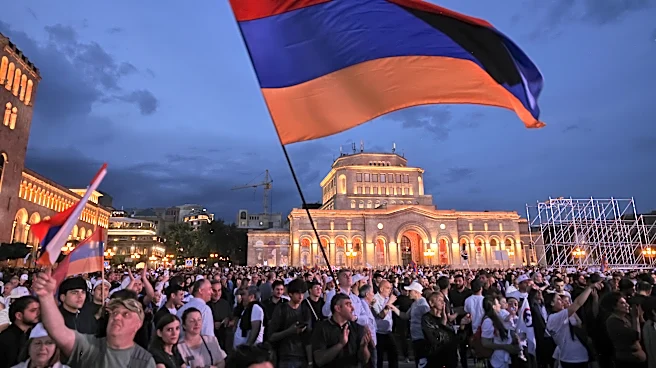
Armenia held a parliamentary election on June 7, 2026, which is seen as a critical test for Prime Minister Nikol Pashinyan's foreign policy shift towards the West. This election comes in the wake of Armenia's
efforts to reduce its reliance on Russia, following Moscow's perceived inaction during Azerbaijan's 2023 military offensive in Nagorno-Karabakh. Pashinyan's government has been working to strengthen ties with the European Union and the United States, aiming for potential EU membership. The election is also framed as a choice between achieving lasting peace with Azerbaijan or risking a return to conflict. Despite Armenia's historical alliance with Russia, the country is exploring new diplomatic avenues, which has led to tensions with Moscow.
Why It's Important?
The election is significant as it could redefine Armenia's geopolitical stance and its relationship with major powers. A shift towards the West could alter the balance of influence in the Caucasus region, traditionally dominated by Russia. This move could also impact Armenia's economic and security policies, potentially opening up new opportunities for trade and cooperation with Western nations. However, it risks straining ties with Russia, which has historically been a key ally and security partner. The outcome of this election could influence regional stability, especially in light of ongoing tensions with Azerbaijan over Nagorno-Karabakh.
What's Next?
Following the election, Armenia is expected to continue its diplomatic balancing act between Russia and the West. Prime Minister Pashinyan has indicated a desire to pursue a balanced foreign policy, suggesting that Armenia will not fully sever ties with Russia. However, the deepening of relations with the EU and the U.S. is likely to continue, potentially leading to further economic and political integration with Western institutions. The international community, particularly Russia, will be closely monitoring Armenia's next steps, as any significant policy shifts could have broader implications for regional alliances and security dynamics.