
What's Happening?
The Gaza Board of Peace is pressing Hamas to agree to disarmament as part of a broader ceasefire agreement. Discussions are taking place in Cairo, with international actors involved in the negotiations.
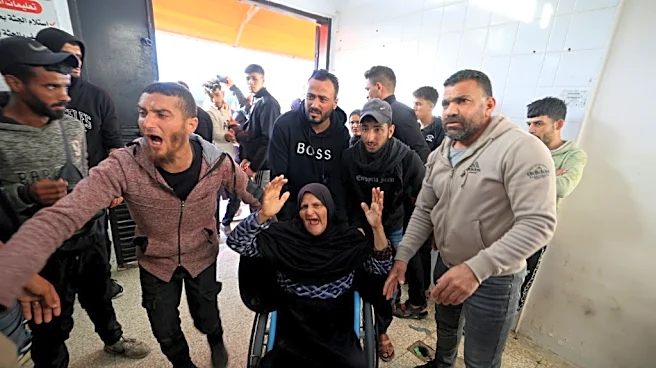
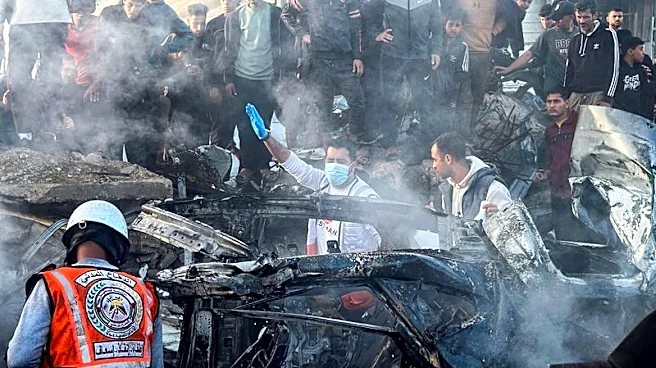
The proposed agreement includes Hamas relinquishing its weapons and revealing tunnel locations, in exchange for amnesty for surviving militants and an Israeli withdrawal from Gaza. However, Hamas has expressed resistance to disarmament without assurances of a complete Israeli withdrawal. The situation remains tense, with ongoing clashes reported along the Yellow Line in Gaza.
Why It's Important?
The disarmament of Hamas is a critical component of achieving long-term peace and stability in the region. Successful negotiations could lead to a reduction in hostilities and improve living conditions in Gaza. However, the reluctance of Hamas to disarm without guarantees poses a significant challenge to the peace process. The outcome of these negotiations could influence future diplomatic efforts and impact the geopolitical landscape in the Middle East, affecting both regional and international stakeholders.
What's Next?
The next steps involve continued negotiations between the Gaza Board of Peace and Hamas, with potential involvement from international mediators to facilitate an agreement. The success of these talks could lead to a formal ceasefire and a roadmap for peace. However, failure to reach an agreement may result in renewed hostilities and further complicate the situation in Gaza. The international community will likely monitor developments closely, with potential implications for foreign policy and humanitarian efforts in the region.