





What's Happening?
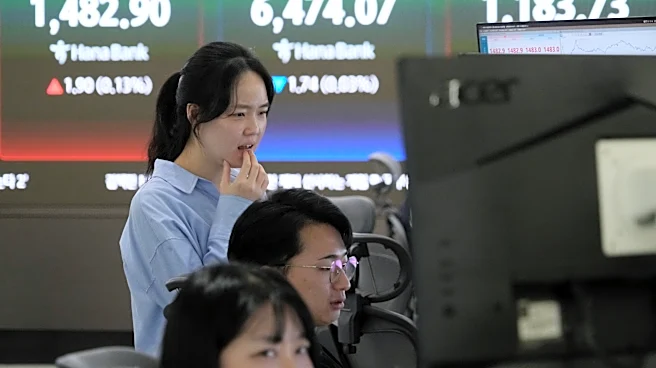
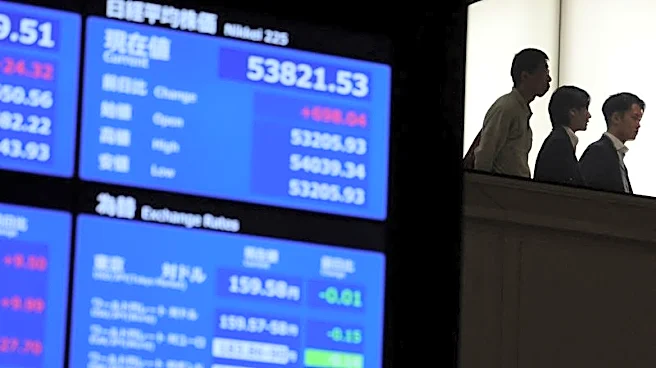
Asian stock markets displayed mixed results as the Nikkei 225 index in Tokyo reached a new record high, following a strong performance by U.S. stocks. The price of oil increased by more than $1 due to ongoing complications in negotiations to end the conflict
with Iran. President Trump announced the cancellation of plans to send U.S. envoys to Pakistan for further talks, citing a lack of progress. The situation has kept tensions high, affecting global oil supply routes, particularly through the Strait of Hormuz. Meanwhile, major central banks, including the Federal Reserve, are expected to make decisions on interest rates this week.
Why It's Important?
The mixed performance in Asian markets and the rise in oil prices highlight the global economic impact of the U.S.-Iran tensions. The conflict has significant implications for international trade and energy markets, as the Strait of Hormuz is a critical passage for global oil shipments. The uncertainty surrounding the negotiations could lead to volatility in financial markets and affect global economic stability. Additionally, the upcoming interest rate decisions by major central banks could further influence market dynamics, impacting investors and economic stakeholders worldwide.
What's Next?
The ongoing U.S.-Iran tensions are likely to continue influencing global markets. Stakeholders will be closely monitoring the situation for any signs of progress in negotiations, which could stabilize oil prices and reduce market volatility. The decisions by central banks on interest rates will also be pivotal, as they could affect economic growth and investor confidence. Market participants will be watching for any policy changes that could impact inflation and economic recovery efforts.