





What's Happening?
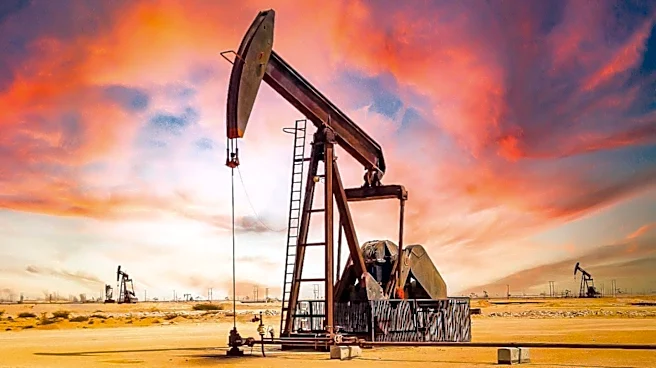
Argentina's Vaca Muerta shale province has achieved record oil and near-record natural gas production, positioning it as a significant player in the global energy market. Located in the province of Neuquén in Patagonia, Vaca Muerta has become a focal
point for energy production outside the United States. Despite this success, the economic benefits have not extended beyond the region. The rest of Argentina continues to face economic challenges, including sluggish growth, high inflation, and weak consumer spending. The country's economy is further burdened by substantial external debts. While Vaca Muerta has bolstered Argentina's energy sector, contributing to GDP growth alongside agriculture, the broader economy remains stagnant. President Javier Milei's administration hopes for a nationwide economic uplift, but progress has been limited.
Why It's Important?
The disparity between the booming Vaca Muerta region and the rest of Argentina highlights the challenges of translating regional success into national economic recovery. The energy sector's growth has not yet spurred widespread job creation or economic development across the country. This situation underscores the difficulty of relying on a single industry to drive national economic progress. The government's reliance on Vaca Muerta and mining to stimulate the economy may not be sufficient to address the broader economic issues. The situation presents a cautionary tale for other nations considering similar economic strategies, emphasizing the need for diversified economic development plans.
What's Next?
The Argentine government is betting on the continued success of Vaca Muerta to eventually stimulate the broader economy. However, analysts warn that the benefits may not materialize quickly enough to impact the upcoming elections. The government faces the challenge of ensuring that the energy sector's growth generates sufficient economic spillovers to benefit the entire country. This will require strategic investments in infrastructure and policies that encourage broader economic participation. The outcome of these efforts will be closely watched by both domestic and international stakeholders, as it could influence future economic policies and investment decisions.
Beyond the Headlines
The situation in Argentina raises important questions about economic inequality and the sustainability of growth driven by a single sector. The stark contrast between the prosperity in Neuquén and the economic struggles elsewhere in the country highlights the need for policies that promote inclusive growth. Additionally, the reliance on energy exports exposes Argentina to global market fluctuations, which could impact long-term economic stability. The government's approach to managing these challenges will be critical in shaping Argentina's economic future and addressing the underlying issues of inequality and economic diversification.