


What's Happening?
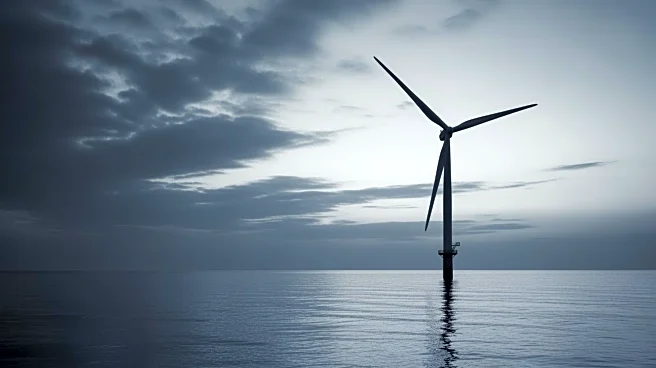
The Trump administration has announced the suspension of federal leases for all large offshore wind projects currently under construction, citing unspecified national security risks. This decision affects five major projects in the Atlantic Ocean, including
a significant wind farm in Virginia. The suspension could delay billions of dollars in investment and stall nearly six gigawatts of new electricity generation. The Interior Department referenced national security risks identified by the Department of War, though specific details were not disclosed. The move has drawn criticism from clean energy advocates and industry stakeholders, who argue that it could harm job creation and increase electricity prices.
Why It's Important?
The suspension of offshore wind projects represents a significant setback for the U.S. renewable energy sector, which has been a key component of efforts to transition to cleaner energy sources. The decision could impact thousands of jobs and delay the availability of cheaper, renewable energy for millions of Americans. It also raises questions about the balance between national security concerns and the need for sustainable energy development. The move may influence future energy policy decisions and the direction of the U.S. energy strategy.
What's Next?
The suspension is likely to prompt legal and political challenges from affected stakeholders, including state governments and renewable energy companies. There may be calls for greater transparency regarding the national security risks cited by the administration. Additionally, the decision could lead to increased advocacy for a diversified energy strategy that includes both renewable and traditional energy sources. As the situation unfolds, stakeholders will need to navigate the complex interplay between energy policy, national security, and economic interests.