








What's Happening?
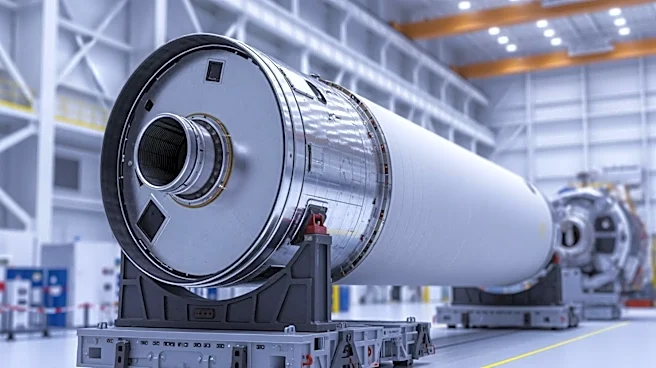
NASA has transported the largest structural component of its next Moon rocket, the Space Launch System (SLS), from the Michoud Assembly Facility in New Orleans to the Kennedy Space Center in Florida. This component, which will stand 212 feet tall when
assembled, is crucial for the Artemis III mission, scheduled for a 2027 launch. The SLS core stage houses liquid hydrogen and oxygen tanks, avionics, and structural elements that power four RS-25 engines, generating over 2 million pounds of thrust. The mission, originally intended as the first crewed lunar landing of the modern era, will now focus on testing the Orion spacecraft's docking capabilities with commercial Human Landing Systems in low Earth orbit. Challenges such as in-space refueling have delayed the timeline, with potential impacts on the 2027 or 2028 landing goals.
Why It's Important?
The Artemis III mission is a pivotal step in NASA's efforts to return humans to the Moon and eventually send crewed missions to Mars. The successful integration and testing of the SLS and Orion spacecraft are critical for future lunar surface missions. The mission's delay highlights the complexities of developing new space technologies, particularly in-space refueling, which is essential for long-duration space missions. The outcome of Artemis III will influence the timeline and feasibility of subsequent missions, including Artemis IV, which aims to establish a sustainable human presence on the Moon. This mission also represents a significant investment in U.S. space exploration capabilities, with implications for international collaboration and competition in space.
What's Next?
Following the arrival of the SLS core stage at Kennedy Space Center, NASA's Exploration Ground Systems team will begin the vertical integration process, attaching solid rocket boosters and preparing the system for launch processing. The success of Artemis III will depend on overcoming technical challenges, particularly those related to the Human Landing Systems. As NASA works towards the 2027 launch, the agency will need to address these issues to ensure the mission's success and maintain the momentum of the Artemis program. The mission's progress will be closely watched by stakeholders in the space industry, government, and the public, as it represents a key milestone in human space exploration.