






What's Happening?
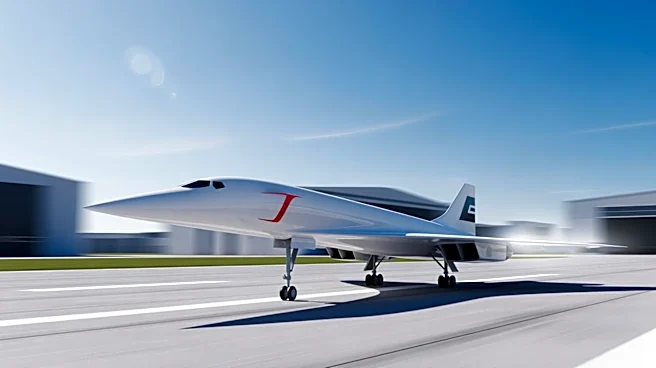
NASA's X-59 experimental aircraft has achieved a significant milestone by completing its first dual-flight day at the Armstrong Flight Research Center in Edwards, California. On April 30, the X-59 conducted its 11th and 12th flights, reaching altitudes
between 12,000 and 43,000 feet and speeds from 528 to 627 mph. This increased testing pace is part of NASA's Quesst mission, which aims to develop technology that reduces the loudness of sonic booms to a gentle thump, potentially enabling commercial supersonic travel over land. The dual-flight days allow NASA to gather more data efficiently, supporting the mission's goals of envelope expansion and acoustic validation by the end of 2026.
Why It's Important?
The X-59's successful dual-flight days mark a crucial step in NASA's efforts to revolutionize air travel by making supersonic flight over land feasible. This development could lead to significant changes in the aviation industry, reducing travel times and opening new commercial opportunities. The data collected from these tests will inform U.S. and international regulators, potentially leading to new regulations that permit quieter supersonic flights. This could benefit airlines, passengers, and the broader economy by enhancing connectivity and efficiency in air travel.
What's Next?
NASA plans to continue its rigorous testing schedule to meet the Quesst mission's objectives. The focus will remain on expanding the flight envelope and validating the acoustic performance of the X-59. As the project progresses, NASA will conduct community overflights to gather public feedback on the quieter sonic thumps, which will be crucial for regulatory considerations. The outcomes of these tests could influence future policy decisions and the commercial viability of supersonic travel.