








What's Happening?
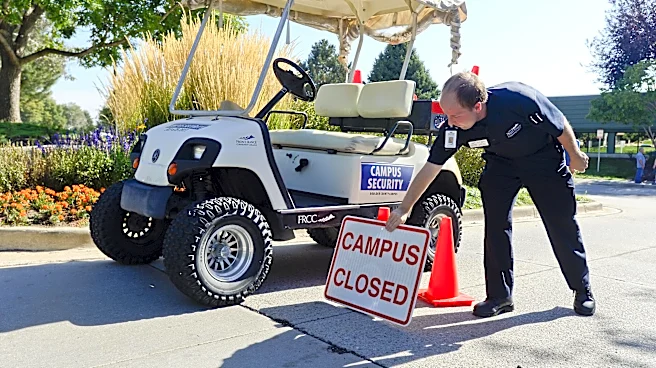
Several school districts in southeast Iowa have announced schedule changes, including closures, for Friday, November 20, due to planned controlled detonations at the Iowa Army Ammunition Plant in Middletown. The detonations involve lead azide and are
expected to produce loud blasts, ground vibrations, and a dust plume that may contain lead. Officials are monitoring wind direction and weather conditions to assess the potential travel of airborne particles. School districts that have announced closures include New London, Burlington, West Burlington, Mediapolis, Danville, Winfield-Mount Union, and Columbus Community Schools. Other districts, such as Mount Pleasant, are taking precautions like keeping students indoors during afternoon recess, despite being outside the projected impact area. Concerns have been raised about lead-containing dust settling on outdoor surfaces, prompting plans for washing down playground equipment in New London.
Why It's Important?
The school closures and precautionary measures highlight significant public health and safety concerns associated with the controlled detonations. The potential for lead contamination from the dust plume poses risks to students and the wider community, particularly regarding long-term health effects of lead exposure. The decisions by school districts reflect a prioritization of student safety and a proactive approach to mitigating potential hazards. This event also underscores the environmental impact of industrial operations, especially those involving hazardous materials, and the need for clear communication and coordination between industrial facilities, local authorities, and educational institutions. The community's response, including plans for cleaning public spaces, demonstrates a collective effort to address potential environmental fallout.
What's Next?
As Friday's detonations approach, school districts will continue to monitor updated projections and communicate any further changes to families. The Iowa Army Ammunition Plant and local authorities will likely maintain close watch on weather conditions, which are crucial for determining the spread of the dust plume. Post-detonation, communities will focus on assessing any environmental impact, with plans already in place for cleaning outdoor surfaces in some areas. Further precautions being considered by schools include upgrading air filtration systems, enhanced cleaning protocols, and arranging for lead testing on school grounds. The dust plume is expected to remain airborne for up to an hour, with particles potentially settling on outdoor surfaces afterward, necessitating ongoing vigilance and potential cleanup efforts.
Beyond the Headlines
This incident brings to light the complex relationship between industrial operations, environmental safety, and community well-being. The presence of facilities like the Iowa Army Ammunition Plant, while vital for national defense, necessitates stringent safety protocols and transparent communication with surrounding communities. The potential for lead exposure raises broader questions about environmental justice and the long-term health monitoring of populations living near such sites. It also highlights the role of local emergency services and public health departments in preparing for and responding to industrial incidents. The proactive measures taken by schools and fire departments demonstrate a community's capacity to organize and protect its most vulnerable members, but also point to the ongoing need for robust environmental regulations and public awareness campaigns regarding hazardous materials.