







What's Happening?
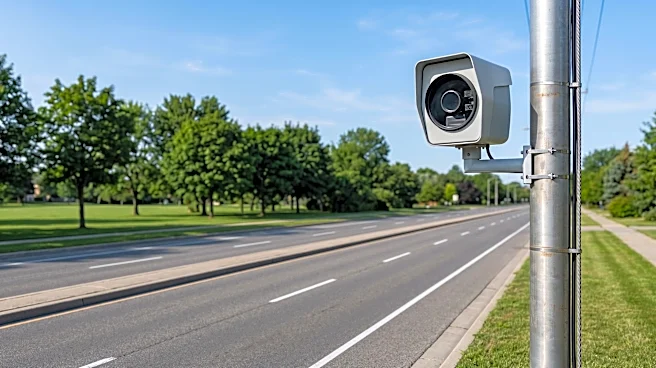
The City of Bellevue has activated new speed cameras, transitioning from a 30-day warning period to issuing citations for speeding violations. These cameras are part of Bellevue's Vision Zero initiative, which aims to eliminate traffic deaths and serious
injuries by 2030. Four cameras have been installed in areas identified for excessive speeding, including locations near parks, hospitals, and school zones. During the August trial period, 12,589 warnings were issued, and officials observed a 40% reduction in the seven-day average of speeding events. The cameras capture license plate images and violation data, which are then reviewed by a Bellevue Police Department officer before a citation is issued. The technology used is not the same as Flock cameras and does not record personal identifiable information or the driver's face, focusing solely on the vehicle's license plate if a speed threshold is exceeded. The initial rollout includes these four cameras, with three more planned for installation by the end of the year, and potentially dozens more in the future across 95 evaluated candidate locations.
Why It's Important?
The implementation of these speed cameras in Bellevue signifies a significant step in urban traffic safety policy, aligning with the Vision Zero global movement. By leveraging automated enforcement, the city aims to directly address speeding, a primary contributor to severe traffic incidents. The reported 40% reduction in speeding events during the warning period suggests the cameras could be an effective tool in altering driver behavior, potentially leading to fewer accidents, injuries, and fatalities on Bellevue's roads. This initiative could serve as a model for other U.S. cities grappling with similar traffic safety challenges, demonstrating how technology can be integrated into urban planning to enhance public safety. For residents and commuters in Bellevue, this means a heightened expectation of adherence to speed limits, with direct financial consequences for violations, impacting daily driving habits and potentially reducing insurance costs due to fewer accidents. The focus on locations near schools and hospitals also underscores a commitment to protecting vulnerable populations.
What's Next?
Following the end of the warning period, the new speed cameras in Bellevue are now actively issuing citations, with fines set at $124, doubling in school zones. The city plans to deploy three additional speed safety cameras by the end of the year, with each new installation preceded by a month-long warning period to allow drivers to adjust and for calibration. Bellevue officials have evaluated 95 potential locations for future camera installations, indicating a long-term commitment to expanding the automated traffic safety program. This phased approach suggests a continuous effort to monitor and reduce speeding across the city. Major stakeholders, including local law enforcement, transportation departments, and community safety advocates, will likely continue to monitor the effectiveness of these cameras in achieving the Vision Zero goals. Drivers in Bellevue should anticipate increased enforcement of speed limits and adjust their driving behavior accordingly to avoid citations.
Beyond the Headlines
The deployment of speed cameras in Bellevue raises broader discussions about the balance between public safety and privacy, as well as the role of technology in urban governance. While city officials emphasize that the cameras do not record personal identifiable information or driver faces, the use of automated enforcement systems often sparks debates about surveillance and data collection. This initiative also highlights a growing trend in U.S. cities to adopt data-driven approaches to traffic management, moving beyond traditional policing methods. The success of Bellevue's program could influence policy decisions in other municipalities, potentially leading to a wider adoption of similar technologies. Furthermore, the financial aspect of the fines, particularly the doubled penalty in school zones, underscores the economic impact on individuals and the potential for revenue generation for the city, which could be reinvested into further safety initiatives or other public services. The long-term cultural shift towards safer driving habits, driven by consistent enforcement, could be a significant outcome.