





What's Happening?
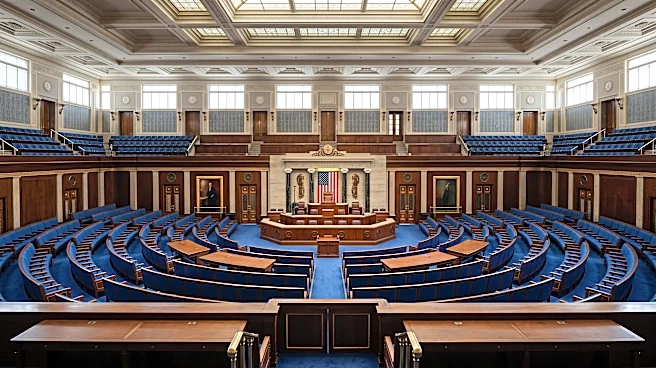
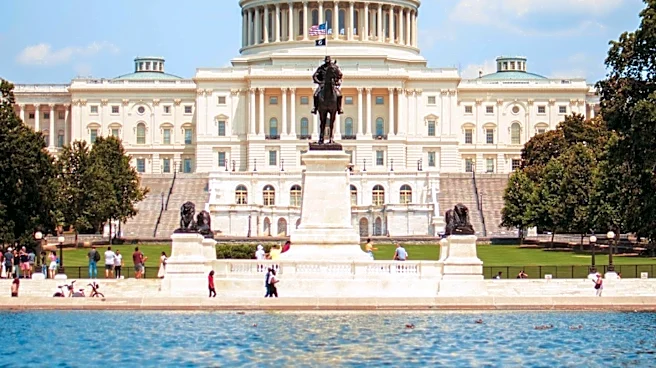
A sanctions package targeting Russia, which previously passed the Senate with bipartisan support, has stalled in the House of Representatives. The delay is primarily due to concerns among House Democrats regarding language within the bill that would grant
the president expanded authority to impose targeted tariffs on countries purchasing Russian oil or gas. While House Speaker Mike Johnson, R-La., acknowledged a broad consensus for sanctioning Russia, he noted "a couple of pockets of concern" about the bill. House Minority Leader Hakeem Jeffries, D-N.Y., expressed "serious concerns" about the legislation, particularly the potential for an expansion of tariff powers for President Trump, who has already tested the limits of such authority during his second term. The House has a limited legislative schedule before the midterms, making the passage of this bill uncertain.
Why It's Important?
The stalling of the Russia sanctions package in the House carries significant implications for U.S. foreign policy and economic strategy. The inability to pass this legislation could weaken the U.S. stance against Russia's actions and potentially undermine international efforts to pressure Moscow. From an economic perspective, the debate over tariff authority highlights a broader tension between congressional oversight and presidential power in trade policy. Granting expanded tariff powers to the president, even for specific geopolitical objectives, raises concerns about potential misuse or unintended economic consequences for U.S. allies and domestic industries. The delay also reflects the challenges of achieving bipartisan consensus on complex foreign policy issues, especially when domestic political considerations, such as the upcoming midterm elections and concerns about presidential authority, come into play.
What's Next?
With the House having a limited number of legislative days before the midterm elections, the future of the Russia sanctions package remains uncertain. House leaders will need to address the concerns raised by Democrats regarding the tariff authority language to move the bill forward. This could involve further negotiations to modify the language, or the bill might be delayed until after the midterms. Stakeholders, including political leaders, foreign policy experts, and industry groups, will be closely watching how Congress navigates this issue. The outcome will indicate the U.S.'s immediate legislative capacity to respond to international crises and the extent to which bipartisan cooperation can be achieved on critical foreign policy matters. The debate also sets a precedent for future discussions on presidential trade powers.
Beyond the Headlines
The debate surrounding the Russia sanctions package extends beyond immediate legislative hurdles, touching upon fundamental questions of executive power and congressional checks and balances. The concern over granting President Trump expanded tariff authority reflects a deeper apprehension about the potential for unilateral executive action in trade and foreign policy. This situation highlights the ongoing tension between the desire for swift, decisive action in international affairs and the constitutional imperative of legislative oversight. Furthermore, the delay in passing these sanctions could be perceived internationally as a sign of U.S. political division, potentially impacting the effectiveness of its foreign policy and its standing among allies. The outcome will not only affect Russia but also shape the dynamics of power between the executive and legislative branches in future foreign policy endeavors.