







What's Happening?
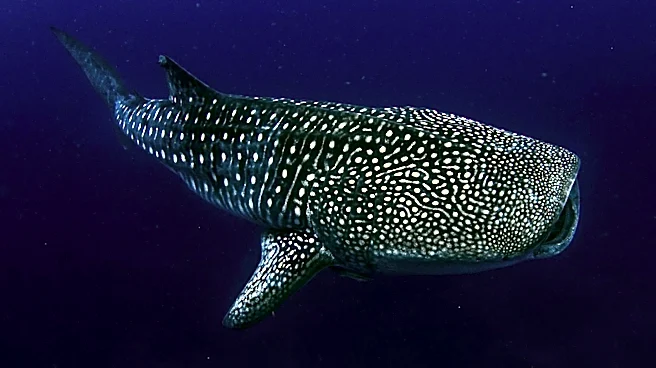
The global population of whale sharks has declined by more than 50% over the past 75 years, according to the International Union for Conservation of Nature (IUCN), classifying the species as endangered. Whale sharks, known for their migratory behavior,
travel thousands of kilometers in tropical oceans to follow food resources. Despite their massive size and docile nature, they face threats from human activities, particularly tourism and fishing. Recent studies by the Australian Institute of Marine Science have provided new insights into their deep-sea feeding strategies, revealing behaviors previously unobserved. Researchers used cameras to track whale sharks underwater, discovering a variety of foraging strategies that help them survive in tropical waters where prey is scarce.
Why It's Important?
The decline in whale shark populations is significant as it highlights the broader issue of marine biodiversity loss. Whale sharks play a crucial role in marine ecosystems as filter feeders, helping maintain the balance of oceanic food chains. Their endangered status underscores the need for enhanced conservation efforts to protect marine life from overfishing and habitat destruction. The new insights into their feeding strategies can inform conservation policies and help develop targeted measures to safeguard these gentle giants. Protecting whale sharks is not only vital for biodiversity but also for the tourism industry, which benefits from their presence in popular diving locations.
What's Next?
Conservationists and researchers are likely to push for stricter regulations on fishing practices and tourism activities that threaten whale sharks. There may be increased advocacy for marine protected areas and international cooperation to enforce conservation measures. Further research into whale shark behavior and habitat use will be essential to develop effective conservation strategies. Public awareness campaigns could also play a role in educating people about the importance of preserving marine life and the threats faced by whale sharks.
Beyond the Headlines
The study of whale sharks' deep-sea behavior opens up new avenues for understanding marine life adaptation to changing environmental conditions. As climate change impacts ocean temperatures and food availability, understanding how whale sharks adapt could provide insights into the resilience of marine species. This research also highlights the ethical considerations of human interaction with marine life, emphasizing the need for responsible tourism practices that do not disturb natural behaviors.