





What's Happening?
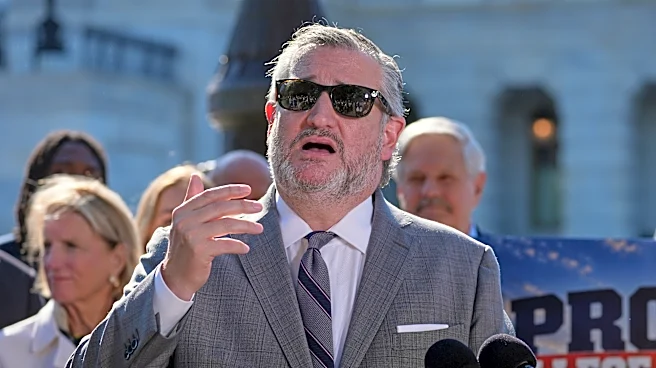
The Senate Commerce Committee has approved, by an 18-10 vote, legislation sponsored by Chairman Ted Cruz (R-Texas) aimed at limiting government coercion of broadcasters and online platforms regarding speech. The bill seeks to address concerns from both
parties about indirect censorship, known as 'jawboning.' It would allow individuals, broadcasters, or platforms to file civil actions against government agencies or employees if coercion is used to alter or remove speech. Additionally, the legislation mandates a public database of government communications with broadcasters, platforms, and AI providers. Senators Brian Schatz (D-Hawaii), Edward J. Markey (D-Mass.), and Jacky Rosen (D-Nev.) voted with Republicans to advance the bill, despite some concerns about its application to artificial intelligence platforms.
Why It's Important?
This legislation is significant because it directly addresses concerns about government overreach and potential First Amendment violations in the digital age. The concept of 'jawboning,' where government officials pressure private entities to remove or modify content, has become a contentious issue, particularly in discussions around social media content moderation and the spread of misinformation. By providing a legal avenue for civil action and requiring transparency through a public database, the bill aims to protect free speech and ensure that content decisions are made by platforms independently, without undue government influence. This could have a profound impact on how social media companies, broadcasters, and emerging AI platforms interact with federal agencies, potentially reshaping the landscape of online expression and information dissemination.
What's Next?
The bill, having passed the Senate Commerce Committee, will now move to the full Senate for consideration. Further debate is expected, particularly regarding its application to AI providers, an area of concern raised by Ranking Member Maria Cantwell (D-Wash.). Chairman Cruz has committed to working with Senator Cantwell on these aspects. If passed by the Senate, the legislation would then need to be considered by the House of Representatives. The bill's journey through Congress will likely involve discussions on the balance between free speech protections, national security, and the government's role in addressing harmful content. The tech industry, represented by groups like NetChoice, has expressed support for the bill, indicating a desire for clearer guidelines on government interactions.
Beyond the Headlines
Beyond its immediate legislative impact, this bill delves into the complex and evolving relationship between government, technology, and free speech in a democratic society. The debate over 'jawboning' highlights the challenges of regulating speech in an era where digital platforms wield immense power over public discourse. The legislation's focus on AI providers also signals a growing recognition of artificial intelligence's role in content creation and dissemination, raising questions about how traditional free speech principles apply to machine-generated content. This could lead to a re-evaluation of Section 230 of the federal telecommunications law, which currently provides liability protections for social media platforms. The long-term implications could include a more formalized framework for government-platform interactions, potentially fostering greater transparency and accountability, but also potentially creating new legal complexities for both parties.