



What's Happening?
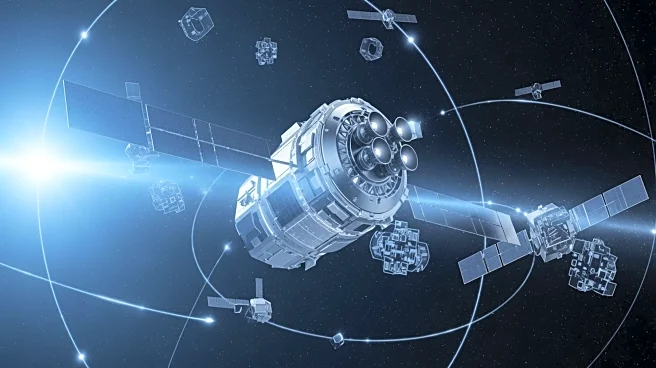
The European Space Agency (ESA) is conducting tests on a new satellite maneuvering system to address the increasing congestion in Earth's orbit. With thousands of satellites, many inactive or damaged, orbiting the planet, the risk of collisions is rising.
To mitigate this, Luxembourg-based companies LMO and ClearSpace are utilizing ESA's Guidance, Navigation and Control Rendezvous, Approach and Landing Simulator (GRALS) to simulate close-proximity operations in space. The system uses Vision-Based Navigation (VBN) technology, similar to self-driving cars, to help satellites safely approach and maneuver around each other. This testing is crucial for ensuring that satellites can refuel, repair, or deorbit safely, thereby maintaining the sustainability of space activities.
Why It's Important?
The increasing number of satellites in orbit poses significant risks to operational spacecraft and the long-term sustainability of space activities. As space becomes more crowded, the ability to safely maneuver satellites is critical to preventing collisions and ensuring the continued functionality of essential satellite services. The development and testing of systems like GRALS and VBN are vital for advancing autonomous satellite operations, which can enhance the safety and efficiency of space missions. This technology not only supports current space activities but also paves the way for future advancements in satellite servicing and debris management, which are essential for the sustainable use of space.