




What's Happening?
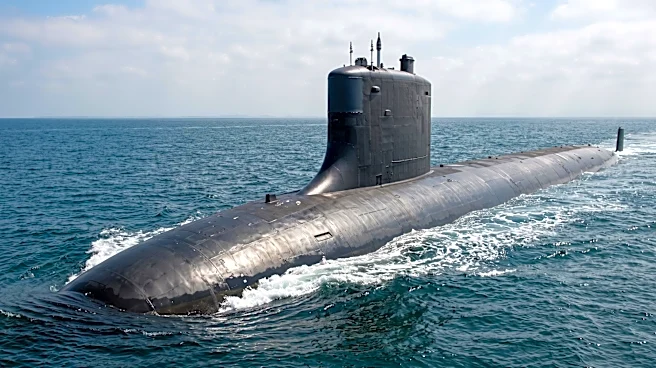
The USS Colorado, a Virginia-class nuclear-powered attack submarine, has arrived in Australia. This deployment is a key component of the U.S. Navy's Submarine Rotational Force-West initiative, which aims to rotate up to four American and one British submarine through
the Indo-Pacific region. The move is part of the trilateral security partnership known as AUKUS, involving the United States, Australia, and Britain. The USS Colorado's assignment is set to begin in late 2027, operating from HMAS Stirling in Western Australia. This initiative is designed to enhance access for U.S. and British submarines to the Indo-Pacific, Indian Ocean, and surrounding waters, thereby strengthening regional deterrence and operational flexibility. The AUKUS partners recently announced that the United States will sell Australia three in-service Virginia-class boats, replacing an earlier plan, with sales slated for the 2030s and the British-Australian SSN-AUKUS for the 2040s. More than 30 Australian civilian technicians from ASC are currently working on a Virginia-class submarine in Western Australia, marking the third such maintenance period in 12 months.
Why It's Important?
This deployment signifies a critical step in the AUKUS security pact, directly addressing the rising influence of China in the Indo-Pacific. By establishing a rotational presence of nuclear-powered submarines in Australia, the U.S. and its allies aim to project sustained undersea power, which is crucial for long-endurance operations in the vast Indo-Pacific. This enhanced presence is intended to deter potential adversaries and provide a robust response capability to China's naval expansion and other regional submarine ambitions. The integration of Australian technicians into the maintenance of U.S. submarines also highlights a deeper level of interoperability and shared responsibility within the alliance, building Australia's capacity to eventually operate its own nuclear-powered fleet. The success of this initiative is vital for maintaining a balance of power in a strategically important region, impacting U.S. national security interests and its alliances.
What's Next?
The Submarine Rotational Force-West is projected to host up to four American submarines and one British boat on rotation from HMAS Stirling, with the USS Colorado's assignment beginning in late 2027. The U.S. plans to sell Australia three in-service Virginia-class submarines in the 2030s, followed by the British-Australian SSN-AUKUS in the 2040s. A significant challenge remains the U.S. shipbuilding capacity, which needs to reach 2.33 attack boats per year, in addition to one Columbia-class boat annually, to support these sales. Currently, the U.S. builds approximately 1.3 attack boats per year, with expectations to reach two per year by 2032. The ongoing integration of Australian technicians into submarine maintenance is a precursor to Australia's readiness to operate and sustain its own conventionally armed, nuclear-powered fleet, consistent with Non-Proliferation Treaty obligations.
Beyond the Headlines
The AUKUS agreement and the deployment of the USS Colorado extend beyond military cooperation, signaling a long-term strategic commitment to regional stability and a redefinition of alliances in the Indo-Pacific. The emphasis on nuclear-powered submarines underscores a shift towards capabilities that offer extended submerged endurance and speed, critical for modern naval warfare. This move also highlights the complex interplay between military strategy, industrial capacity, and international non-proliferation efforts. The development of Australia's sovereign nuclear submarine capability, supported by the U.S. and UK, will require significant investment in infrastructure, training, and regulatory frameworks. The success of this endeavor will not only depend on the delivery of submarines but also on the sustained development of a robust industrial base and a highly skilled workforce capable of operating and maintaining these advanced platforms.