



What's Happening?
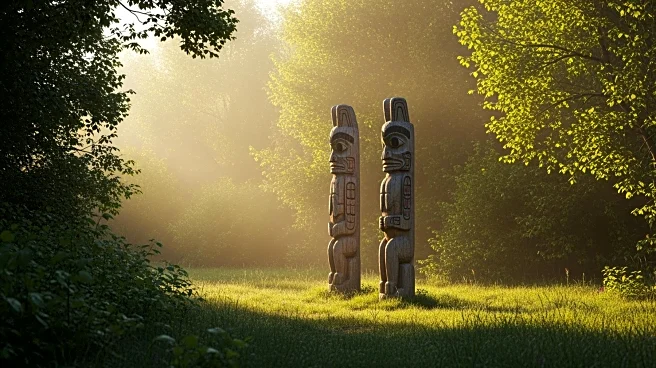
The Sammakka-Sarakka Jatara, held in the forests of Mulugu, is a significant cultural and spiritual event that celebrates Adivasi heritage. This festival, which draws millions of devotees, centers around the worship of the warrior goddesses Sammakka and Sarakka,
represented by two wooden poles known as Gaddelu. The event challenges traditional religious norms and highlights the unity of diverse communities, as people from various castes come together to participate. Despite criticism from some spiritual figures who question the divinity of these deities, the festival remains a powerful assertion of indigenous spirituality. The state government has recognized the importance of this event by allocating significant funds for its infrastructure and renovation, further emphasizing its cultural significance.
Why It's Important?
The Sammakka-Sarakka Jatara is crucial for preserving Adivasi culture and promoting unity among different social groups. It challenges the dominance of Vedic orthodoxy by celebrating deities that are rooted in local history and sacrifice rather than traditional religious texts. The festival's ability to bring together people from various castes highlights its role in fostering social cohesion and breaking down caste barriers. The government's investment in the festival's infrastructure underscores its recognition of the cultural and spiritual importance of the event, which could lead to increased support for indigenous traditions and greater cultural preservation efforts.
What's Next?
The completion of the Gaddelu renovation has raised concerns among Adivasis about maintaining the authenticity of their traditional worship practices. As the government continues to invest in the festival, there is a need to balance development with the preservation of cultural heritage. Future efforts may focus on ensuring that modernization does not erode the unique aspects of Adivasi spirituality, such as the open-air worship that has been a hallmark of the festival. Ongoing dialogue between the government and Adivasi communities will be essential to address these concerns and protect the festival's cultural integrity.
Beyond the Headlines
The Sammakka-Sarakka Jatara highlights broader issues of cultural preservation and the recognition of indigenous rights. The festival's emphasis on historical figures who resisted tyranny resonates with contemporary movements advocating for indigenous sovereignty and cultural autonomy. As the festival gains more attention, it may inspire similar events that celebrate indigenous heritage and challenge dominant cultural narratives. The government's involvement in the festival also reflects a growing acknowledgment of the importance of indigenous cultures in shaping national identity and policy.