







What's Happening?
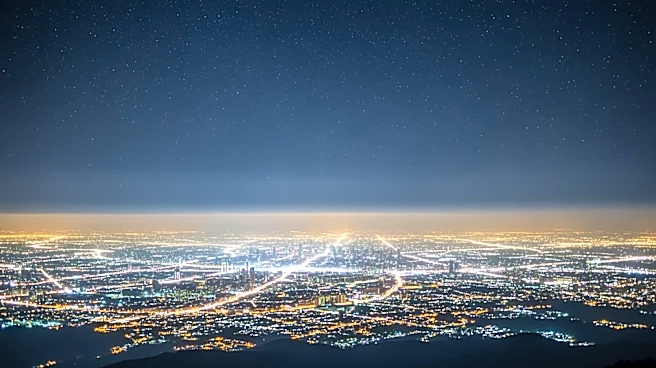
A recent study utilizing NASA satellite imagery has revealed a significant increase in artificial light pollution, brightening the Earth by 16% between 2014 and 2022. This research, conducted by the University of Connecticut, highlights the growing impact
of artificial lighting on natural darkness, affecting both human and animal health. The United States, followed by China, India, Canada, and Brazil, has been identified as having the highest total luminosity. The study, published in Nature, also notes regional variations in light pollution, with some areas experiencing dimming due to conflicts or energy crises, such as the Russia-Ukraine conflict in 2022.
Why It's Important?
The increase in artificial light pollution has significant implications for both ecological systems and human health. For wildlife, excessive lighting disrupts natural behaviors such as migration and feeding patterns, particularly affecting species that rely on natural light cues. For humans, artificial light at night can interfere with circadian rhythms, potentially leading to health issues like sleep disorders and increased cancer risks. The findings underscore the need for policies and practices that mitigate light pollution to preserve natural environments and protect public health.
What's Next?
Efforts to address light pollution may involve implementing stricter regulations on outdoor lighting and promoting the use of energy-efficient, less intrusive lighting solutions. Organizations like DarkSky International advocate for public awareness and policy changes to reduce light pollution. Future research may focus on developing technologies and strategies to balance the need for artificial lighting with environmental and health considerations.
Beyond the Headlines
The study's findings highlight a broader cultural and ethical challenge in balancing technological advancement with environmental stewardship. As urbanization continues, the demand for artificial lighting is likely to increase, necessitating innovative solutions to minimize its ecological footprint. This issue also raises questions about the cultural value of natural darkness and the night sky, which are increasingly obscured by human activity.