
What's Happening?
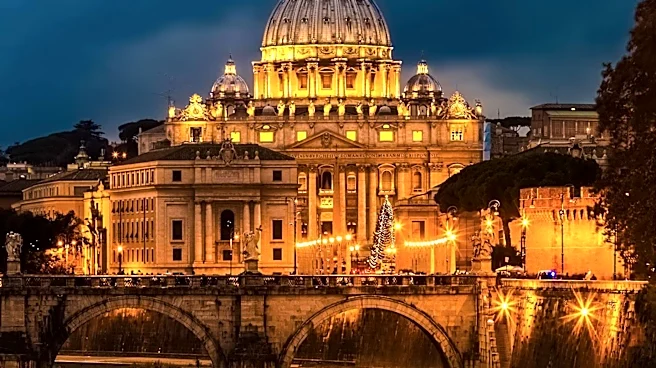
Vatican City, the world's smallest country, is a fully sovereign state with its own constitution, currency, military, and postal service, all within a territory smaller than many city parks. Established
by the Lateran Treaty in 1929, Vatican City serves as the spiritual and administrative center of the Catholic Church. Despite its small size, the Vatican wields significant influence through the Holy See, which maintains diplomatic relations with 184 states and represents over 1.42 billion Catholics worldwide. The Vatican's unique status as an absolute monarchy governed by the pope allows it to operate as a significant player in international diplomacy.
Why It's Important?
The Vatican's influence extends far beyond its physical borders, impacting global religious, cultural, and political landscapes. As the central governing body of the Catholic Church, the Holy See plays a crucial role in international relations, advocating for peace, human rights, and social justice. The Vatican's ability to engage with world leaders and participate in global discussions underscores the importance of non-state actors in international diplomacy. Its unique position allows it to address global issues from a moral and ethical perspective, contributing to broader dialogues on global governance.
Beyond the Headlines
The Vatican's influence is not solely based on its religious authority but also on its historical longevity and diplomatic acumen. Its ability to navigate complex international relations while maintaining its spiritual mission highlights the multifaceted role of religious institutions in global affairs. The Vatican's engagement in international diplomacy serves as a reminder of the enduring power of soft influence and the potential for religious entities to contribute to global peace and stability.