








What's Happening?
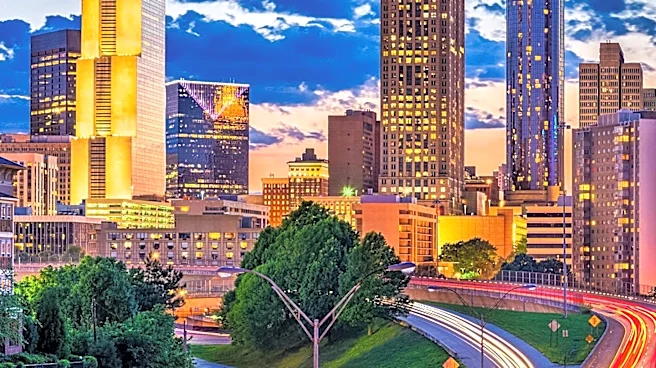
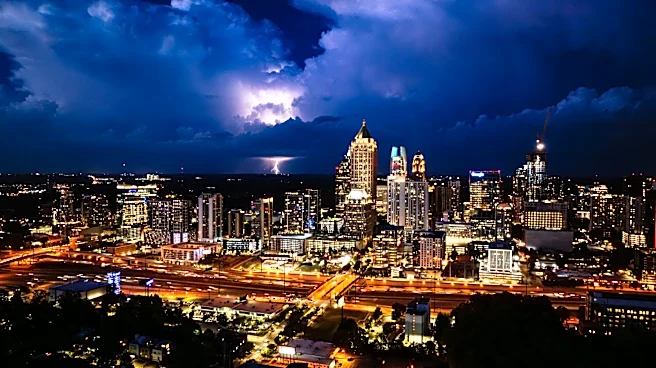
In Atlanta, Georgia, city employees recently disposed of tents, medication, identification, and other belongings of unhoused individuals at a public park without prior notice. This action has sparked criticism from activists and a local official, who
argue that it violates procedures established after a tragic incident last year where a city employee accidentally killed a man, Cornelius Taylor, by running over his tent with a front loader. The recent sweep occurred near a popular area for World Cup watch parties, highlighting ongoing tensions regarding the treatment of the city's unhoused population during the tournament. A city official stated that the park, where approximately 15 people have been residing for months, was not considered an encampment, and the incident was not classified as a sweep.
Why It's Important?
The treatment of unhoused individuals in Atlanta during the World Cup has raised significant ethical and social concerns. The actions taken by city employees have drawn attention to the broader issue of how cities manage their homeless populations, especially during high-profile events. This situation underscores the challenges faced by vulnerable communities when economic and social pressures increase during international events. The criticism from activists and officials highlights the need for more humane and consistent policies that protect the rights and dignity of unhoused individuals. The incident also reflects the ongoing struggle between urban development and social responsibility, as cities attempt to balance economic interests with the welfare of all residents.
What's Next?
The incident may prompt further scrutiny of Atlanta's policies regarding the treatment of unhoused individuals, particularly during major events like the World Cup. Activists and local officials are likely to continue advocating for more transparent and humane procedures to prevent similar occurrences in the future. The city may face pressure to review and potentially revise its approach to managing public spaces and supporting its unhoused population. Additionally, this situation could influence broader discussions on homelessness and urban policy in other cities hosting large-scale events.