







What's Happening?
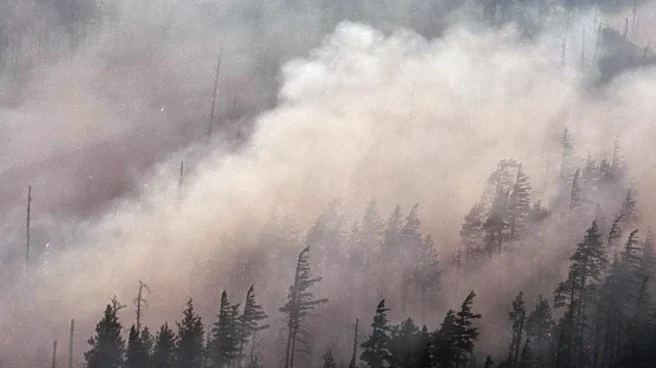
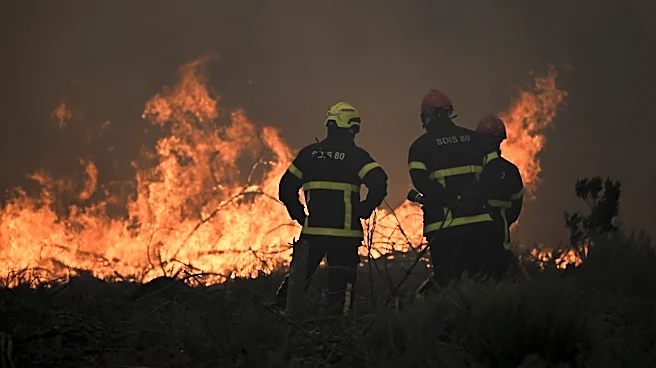
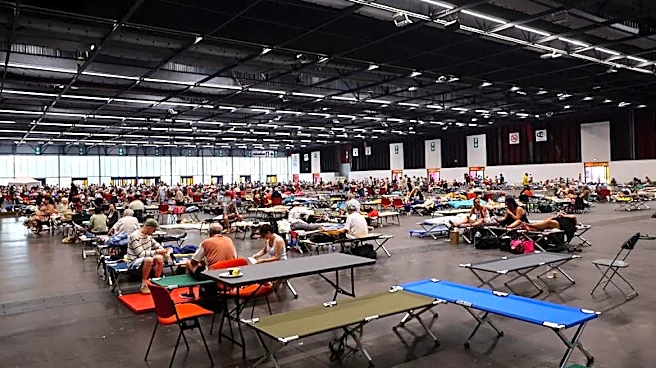
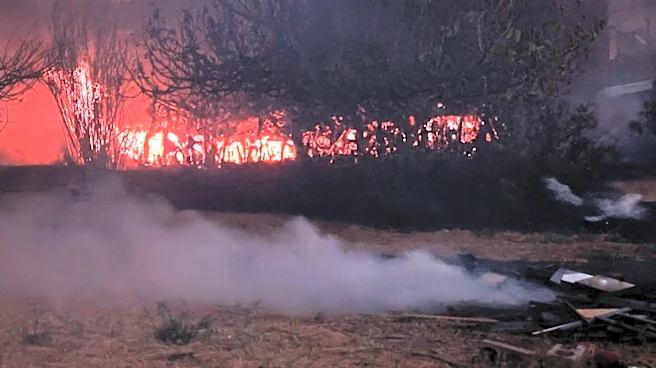
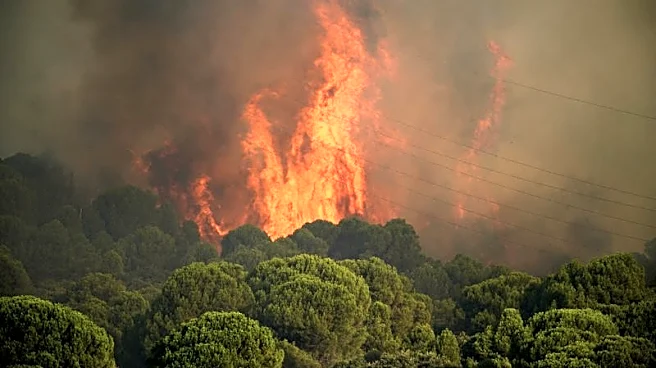
A massive wildfire in southwest France has stabilized after forcing 220,000 people to evacuate the region around Bordeaux. French Interior Minister Laurent Nunez announced that the fire had stopped growing, providing a glimmer of hope. However, with temperatures
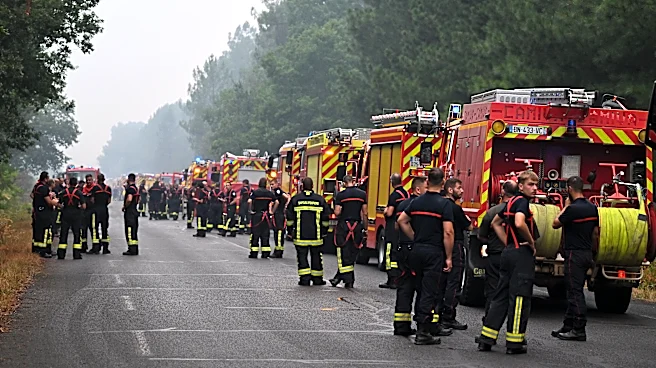
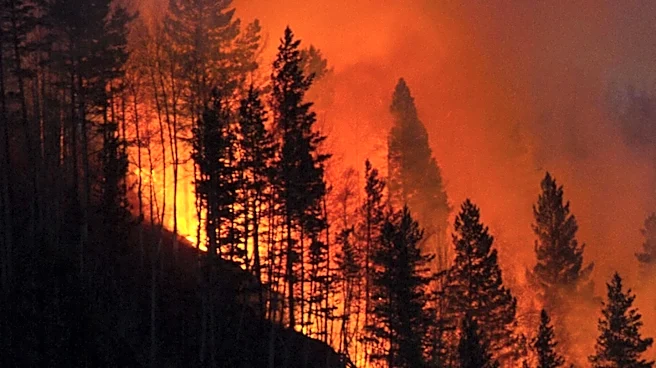
expected to rise, the situation remains precarious. The fire, fueled by early heat waves, has burned an area four times the size of Paris. French President Emmanuel Macron held a crisis meeting to address the situation, and authorities have banned holiday camps to prevent further evacuations. The firefighting effort involves thousands of personnel and international assistance, including planes and helicopters.
Why It's Important?
The wildfire in France highlights the increasing frequency and intensity of climate-related disasters, prompting calls for stronger action against climate change. The scale of the evacuations and the international response underscore the global nature of climate challenges. The situation in France, along with similar fires in Spain, demonstrates the urgent need for policies that address climate resilience and disaster preparedness. The economic impact on tourism and local communities is significant, as the region is popular for its beaches and woodlands. The event serves as a stark reminder of the consequences of climate inaction.
What's Next?
With temperatures expected to rise, firefighting efforts will continue to prevent the fire from spreading further. Authorities may implement additional measures to protect residents and tourists, potentially affecting local economies. The situation may lead to increased political pressure on governments to adopt more aggressive climate policies. International cooperation in disaster response could strengthen, setting a precedent for future climate-related emergencies. The focus on climate change may influence public opinion and policy discussions in France and beyond.