






What's Happening?
The United States is experiencing an earlier start to the flu season this year, with public health agencies and healthcare providers recommending immediate vaccination. Typically, the flu season gains momentum in the deep winter months, but current data
from the Centers for Disease Control and Prevention (CDC) indicates increasing seasonal flu activity in many parts of the country, particularly on the West Coast. For instance, California's test positivity rate for influenza is at 8.8 percent, and Alaska reported a noticeable increase in cases since mid-August. This early surge is largely attributed to an H1N1 variant with a D.3.1.1 HA subclade, which may be more immune-evasive. Experts like Dr. Thomas Russo, professor and chief of infectious disease at the University at Buffalo, note the unpredictability of the flu season's beginning. While cases are generally still low nationwide, the early onset suggests that the traditional vaccination deadline of Halloween might be too late for optimal protection.
Why It's Important?
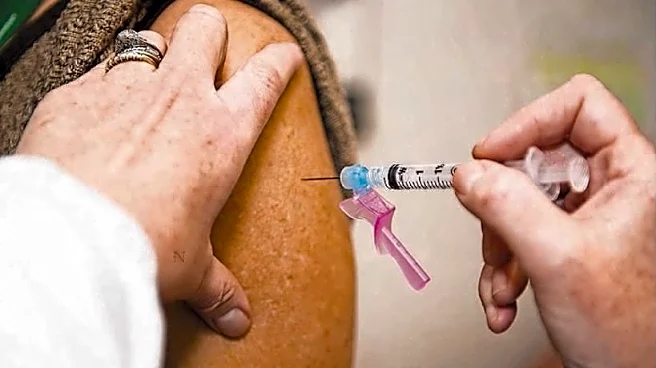
The early onset of the flu season carries significant implications for public health and healthcare systems across the U.S. An earlier start could potentially strain healthcare resources sooner than anticipated, especially if it leads to a more severe or prolonged season. The presence of a potentially immune-evasive H1N1 variant raises concerns about vaccine effectiveness and the potential for increased transmission among individuals with some existing immunity. Prompt vaccination is crucial because it takes approximately two weeks for the body to build adequate protection after receiving the shot. Delaying vaccination could leave individuals vulnerable during the initial peak of flu activity. Public health campaigns will need to adapt to this earlier timeline to encourage timely vaccination, aiming to mitigate widespread illness, reduce hospitalizations, and prevent potential fatalities, thereby lessening the burden on hospitals and emergency services.
What's Next?
Healthcare providers and public health agencies will continue to monitor the circulating flu strains and the progression of the season. Individuals who have not yet received their flu shot are strongly advised to do so immediately, rather than waiting for the traditional late October deadline. Experts like Asefeh Faraz Covelli, a researcher and associate professor at The George Washington University School of Nursing, emphasize that September and October are generally the best months for vaccination to ensure protection throughout the season. The CDC will likely issue further guidance as more data becomes available regarding the severity and trajectory of this year's flu season. There is also a possibility of multiple waves of influenza, involving both influenza A and B strains, which would necessitate sustained public health vigilance and vaccination efforts throughout the fall and winter months.
Beyond the Headlines
The early and potentially more immune-evasive flu season highlights broader challenges in public health preparedness and vaccine uptake. It underscores the dynamic nature of viral evolution and the continuous need for robust surveillance systems to detect emerging strains and predict seasonal patterns. This situation also brings to light the importance of public trust in health recommendations and the ongoing efforts to combat vaccine hesitancy. An early flu season, coupled with the potential for co-circulation of other respiratory viruses like RSV and COVID-19, could lead to a 'tridemic' scenario, further complicating diagnosis and treatment. This emphasizes the need for integrated public health messaging and coordinated vaccination strategies to protect vulnerable populations and maintain healthcare system resilience against multiple concurrent threats.