




What's Happening?
A decade of data collected by the Deep-Pelagic Nekton Dynamics of the Gulf (DEEPEND) Consortium, following the Deepwater Horizon oil spill, indicates a rapid decline in pelagic fish and invertebrates in the deep Gulf of Mexico. Scientists observed severe
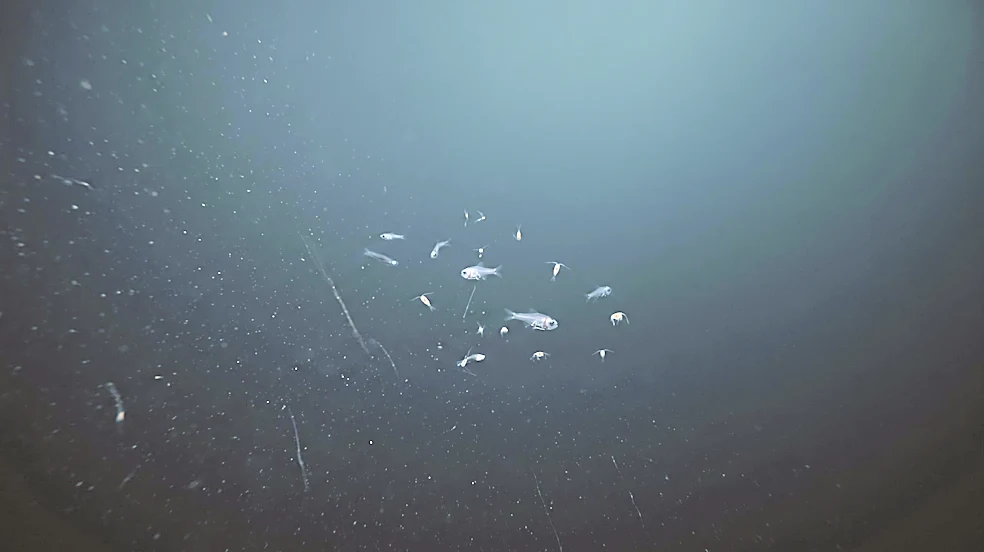
reductions across major faunal groups between 2015 and 2023 compared to baseline data from 2011. All fish populations decreased by 63.5 percent, lanternfish by 62.9 percent, bristlemouth fish by 72.8 percent, and all macrocrustaceans (including krill and decapod shrimps) by 62 percent. Krill alone saw a 72.8 percent decline, and all cephalopods decreased by 59.7 percent. These organisms form the base of the pelagic food web, serving as prey for larger Gulf predators. While a direct causal link to the Deepwater Horizon oil spill cannot be definitively proven, scientists have not identified any other likely explanation for these widespread declines. The study also utilized echosounders to measure acoustic backscatter, which corroborated the findings by showing a 40 percent decline in total backscatter in the epipelagic zone at night, indicating a reduction in biomass.
Why It's Important?
The observed declines in deep Gulf pelagic fish and invertebrates are critically important because these organisms are the foundation of the entire pelagic food web. Their significant reduction directly impacts larger predators such as tuna, billfish, oceanic dolphins, and various whale species, including sperm whales, beaked whales, and Rice's whales, which have also experienced decadal declines of up to 80 percent. This suggests a potential system-wide ecological regime shift, indicating that the deep-pelagic ecosystem, despite its vastness, is more fragile than previously understood and highly susceptible to large-scale disturbances. The reduction in genetic diversity among important lanternfish species further exacerbates the issue, potentially leading to population bottlenecks and reduced ecological resilience. This could have long-term consequences for the biodiversity and stability of the Gulf of Mexico's marine ecosystem, affecting commercial fisheries and overall ocean health.
What's Next?
The findings from the DEEPEND Consortium highlight an urgent need for continued monitoring and research into the deep-pelagic ecosystem of the Gulf of Mexico. Future efforts will likely focus on further investigating the long-term impacts of the Deepwater Horizon oil spill and other potential stressors on these vulnerable populations. Scientists will aim to identify specific mechanisms of impact and explore potential mitigation strategies to support ecosystem recovery. Policy discussions may arise regarding stricter regulations for offshore drilling and increased funding for marine conservation and research in the Gulf. Stakeholders, including environmental organizations, fishing industries, and government agencies, will likely engage in dialogues to address the implications of these declines for both ecological health and economic sustainability in the region. The data may also inform broader discussions on the resilience of deep-ocean ecosystems to anthropogenic disturbances.
Beyond the Headlines
The drastic decline in deep Gulf pelagic fauna underscores a broader ethical and environmental concern about human impact on seemingly remote and vast ecosystems. The study challenges the perception that deep-ocean environments are impervious to surface-level disturbances, revealing their inherent fragility. This development could trigger a re-evaluation of environmental impact assessments for industrial activities in marine environments, particularly those involving potential large-scale pollution events. Legally, these findings could strengthen arguments for increased corporate accountability and more robust regulatory frameworks to prevent future ecological disasters. Culturally, it may foster a greater public awareness and appreciation for the interconnectedness of marine life, from microscopic organisms to apex predators, and the critical role each plays in maintaining planetary health. The long-term shift could involve a paradigm change in how deep-sea ecosystems are managed and protected, moving towards more precautionary and holistic conservation approaches.