







What's Happening?
Ala al-Din Hussain, known as Jahansuz, a sultan of the Ghurid dynasty, displayed a deep affinity for poetry and music, even amidst his military campaigns and conquests. Historical accounts, particularly from Juzjani, detail his literary talents and his practice
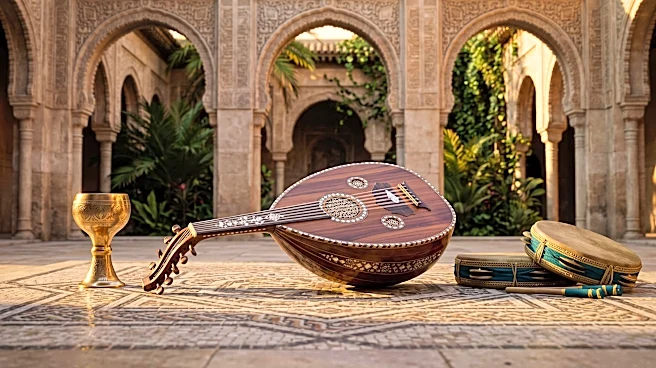
of incorporating poetry and music into celebrations and reflections. After his decisive victory over Bahram Shah Ghaznavi and the capture of Ghazni in 544 AH (1149-1150 CE), Ala al-Din spent a week in revelry, composing verses in self-praise and ordering musicians to set them to song. He later declared a week of mourning for his fallen brothers, demonstrating a complex character that balanced martial prowess with artistic sensibility. Upon returning to Firuzkoh and ascending the throne, he again engaged in gatherings of pleasure, music, and poetry, composing intricate poems that showcased his mastery of literary devices and musicality. His poems often featured boastful themes of victory and justice, yet also contained elements of pardon and mercy towards the conquered.
Why It's Important?
The historical portrayal of Ala al-Din Jahansuz highlights the significant role of arts, particularly poetry and music, within the royal courts of medieval Islamic empires. His personal engagement in composing and commissioning musical renditions of his works indicates that these art forms were not merely entertainment but integral to expressing power, legitimizing rule, and shaping cultural identity. This blend of military leadership with artistic patronage suggests a sophisticated understanding of governance, where cultural expression served as a tool for both personal reflection and public declaration. For historians and cultural scholars, Ala al-Din's story provides valuable insights into the intellectual and artistic environment of the Ghurid era, demonstrating that rulers were often cultivated individuals who actively participated in the cultural life of their courts, influencing the development and appreciation of poetry and music in the region.
Beyond the Headlines
Ala al-Din Jahansuz's story transcends a simple historical narrative of conquest by revealing the intricate relationship between power, art, and personal expression in medieval leadership. His ability to transition from burning a city for seven days to composing eloquent poetry and then observing a period of mourning illustrates a multifaceted leadership style that integrated violence with cultural refinement. This duality challenges simplistic views of historical figures, suggesting that even in times of intense conflict, leaders could possess profound artistic sensibilities. Furthermore, his direct involvement in the creation and performance of art underscores the idea that art was not just consumed but actively produced by the elite, serving as a powerful medium for self-representation and the articulation of political and personal narratives. This historical example offers a rich case study for understanding how cultural practices were intertwined with political authority and personal identity in pre-modern societies.