


What's Happening?
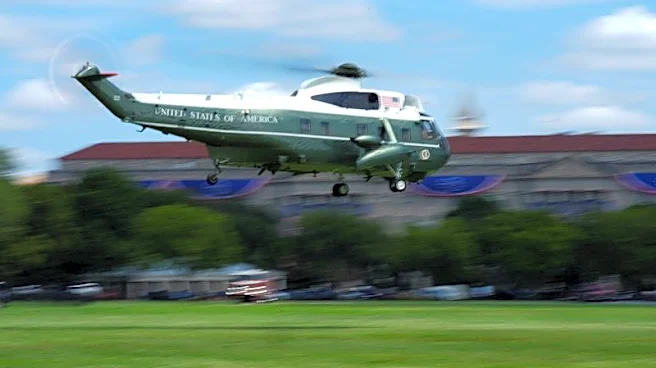
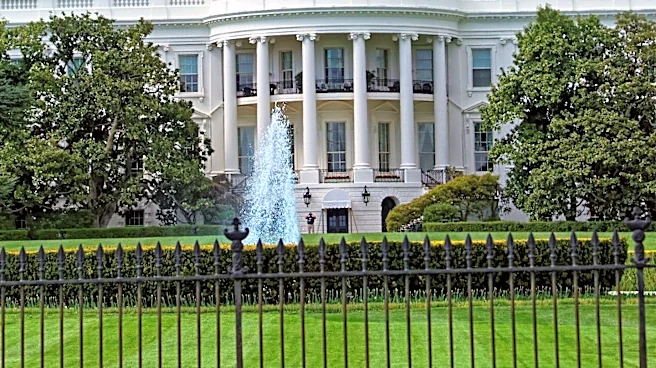
President Trump’s helipad project on the White House South Lawn is experiencing changes, with some construction work being reversed. The helipad was initially constructed to accommodate the new VH-92A Patriot helicopter, which scorched the lawn during
test runs. Recent images show workers removing letters spelling 'Seal of the President of the United States' from the landing pad. The White House has not provided specific details on whether these changes are cosmetic or operational, stating that adjustments are part of ongoing improvements. The project, initially estimated to cost $5-6 million and funded by Lockheed Martin, faces uncertainty regarding additional costs. Trump has been personally involved in this and other infrastructure projects around Washington, DC, many of which have faced legal challenges.
Why It's Important?
The helipad project is part of President Trump’s broader efforts to reshape infrastructure around the White House and Washington, DC. These projects, including a ballroom and renovations at the Kennedy Center, have faced public dissatisfaction and legal hurdles. The helipad’s partial disassembly raises questions about project management and cost implications, potentially affecting Lockheed Martin’s financial responsibilities. The construction endeavors are seen as integral to Trump’s legacy, reflecting his real estate background and hands-on approach. Public opinion, as indicated by recent polling, shows significant dissatisfaction with these projects, highlighting the political and social impact of such initiatives.
What's Next?
Further developments in the helipad project may include additional adjustments or clarifications from the White House regarding the nature of the changes. Lockheed Martin’s role and financial involvement could be reassessed, depending on the project's progression. Legal challenges to Trump’s infrastructure projects may continue, influencing future construction plans. Stakeholders, including political leaders and the public, will likely monitor these developments closely, considering the implications for government spending and urban planning in Washington, DC.