





What's Happening?
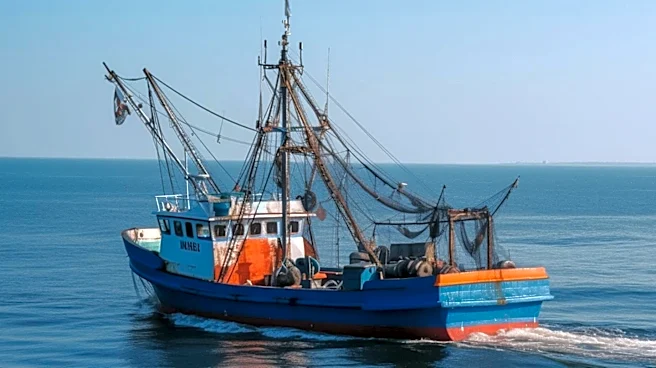
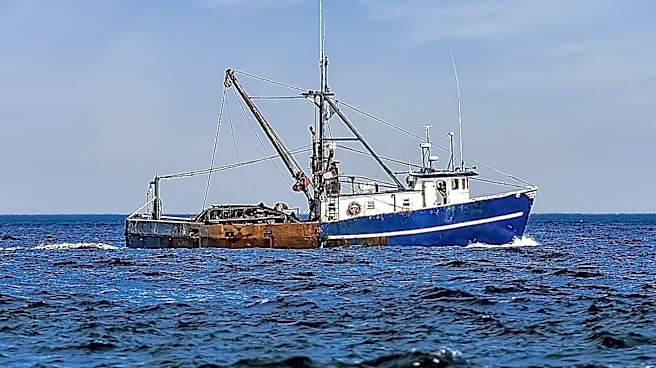
A $15 million federal grant from the U.S. National Science Foundation has been awarded to a consortium of New England commercial fishing advocates, oceanographic researchers, and technology companies. The funding aims to enhance the region's seafood industry
from harvesting to processing. Key projects include developing a 'third eye' camera system for groundfishermen, allowing them to see what enters their nets before hauling, thereby reducing unwanted bycatch. Additionally, autonomous robots will be developed to detect adverse underwater environmental conditions, such as high temperatures and low dissolved oxygen, which can lead to dead lobsters in traps. The grant also allocates funds to address the decline in the seafood processing sector in New England, with half a million dollars specifically earmarked for 'supply chain roadmapping' to understand the extent of the decline and strategize rebuilding efforts. This initiative seeks to bring back processing jobs that have moved overseas.
Why It's Important?
This federal grant is crucial for the U.S. commercial fishing industry, particularly in New England, which has faced economic struggles and a decline in its processing sector. The technological advancements, such as the 'third eye' camera and autonomous robots, are expected to improve fishing efficiency and sustainability by reducing bycatch and preventing losses due to environmental factors. This directly impacts the profitability and operational costs for fishermen, potentially leading to more stable incomes and a healthier marine ecosystem. Furthermore, the focus on revitalizing the seafood processing industry addresses a significant economic and employment challenge. The loss of processing jobs to overseas markets has weakened the regional economy, and this grant aims to reverse that trend, creating local employment opportunities and strengthening the domestic seafood supply chain. By investing in innovation and infrastructure, the grant seeks to make the U.S. seafood industry more competitive and resilient against economic pressures and environmental changes.
What's Next?
The immediate next steps involve researchers at the University of Massachusetts Dartmouth’s School for Marine Science and Technology (SMAST) further developing the camera systems for groundfishermen. The Cape Cod Commercial Fishermen’s Alliance will focus on advancing autonomous robots to detect adverse environmental conditions for lobstermen. The 'supply chain roadmapping' initiative will commence to comprehensively analyze the decline in New England's seafood processing industry and formulate strategies for its rebuilding. This will involve collecting and analyzing data from various sources, including NOAA and state agencies, to understand the full scope of the issue. Stakeholders, including fishermen, researchers, and industry leaders, will collaborate to implement these projects. The success of these initial phases will likely determine future investments and broader adoption of these technologies and strategies across the U.S. commercial fishing sector.
Beyond the Headlines
Beyond the immediate economic and technological benefits, this grant signifies a broader shift towards integrating advanced technology and data-driven approaches into traditional industries like commercial fishing. The development of 'third eye' cameras and autonomous robots represents a move towards precision fishing, which could set new standards for sustainable practices and resource management. This initiative also highlights the ethical dimension of public funding, as Jake Kritzer, executive director for the Northeastern Regional Association of Coastal Ocean Observing Systems, noted that the government is incurring the risk for an industry that is currently risk-averse. The effort to rebuild the processing sector locally touches upon national economic sovereignty and food security, reducing reliance on overseas processing and ensuring a more robust domestic supply chain. This could also foster a new generation of skilled labor in seafood technology and processing, transforming the industry's workforce and long-term viability.