





What's Happening?
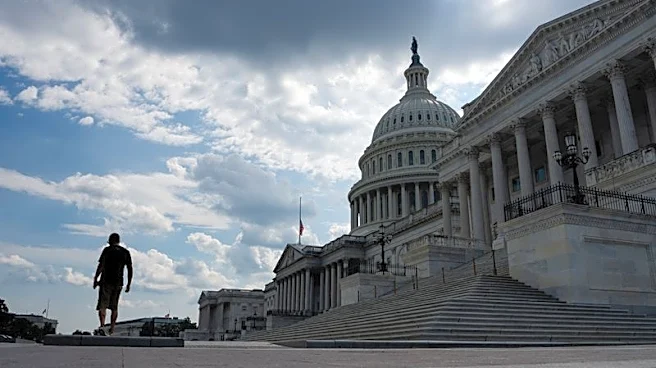
Representative Chrissy Houlahan, a Pennsylvania Democrat and Air Force veteran, has proposed mandatory training for all lawmakers on how to handle classified information. This proposal was made during a House Rules Committee 'member day' hearing, an event
where lawmakers offer ideas to improve House efficiency. Houlahan, who serves on the House Intelligence Committee, highlighted the current lack of such training as a significant oversight, especially given that many lawmakers arrive in Washington without a national security background. Her proposal received bipartisan support, with Republican Representative Randy Fine and Republican Representative Jen Kiggans also expressing concerns about the absence of proper training for handling sensitive material. Kiggans noted that many constituents undergo more rigorous training and mandatory updates for handling intelligence compared to members of Congress.
Why It's Important?
The proposal for mandatory classified information training addresses a critical vulnerability in national security and congressional operations. Without proper training, lawmakers, who are privy to sensitive national security information, could inadvertently compromise classified data, leading to severe consequences for U.S. intelligence and defense. The bipartisan support for this measure underscores a shared recognition of the problem, transcending typical political divisions. This initiative could enhance the professionalism and security protocols within Congress, ensuring that those entrusted with national secrets possess the necessary knowledge and discipline to protect them. It also reflects a broader desire among rank-and-file lawmakers to improve the functional efficiency and accountability of the House, potentially shifting some power dynamics away from leadership and towards more organizational integrity.
What's Next?
The proposal for mandatory classified information training will likely be considered by the House Rules Committee as they craft a package of rules at the beginning of the next Congress. While the 'member day' hearing is a platform for ideas, the implementation of such a change would require formal adoption within House rules. Given the bipartisan backing, there is a potential for this proposal to gain traction. However, past attempts at seemingly simple fixes to House operations have often languished due to resistance from leadership, as noted by Representative Houlahan. The next steps would involve the Rules Committee evaluating the feasibility and necessity of the training, potentially drafting specific requirements, and then presenting it for a vote. The outcome will depend on whether leadership prioritizes organizational benefit over existing operational norms.
Beyond the Headlines
Beyond the immediate security implications, the push for mandatory training on classified information highlights a deeper issue within congressional culture: the perceived disconnect between the responsibilities of lawmakers and the practical support systems in place. The fact that an Air Force veteran and Intelligence Committee member finds the current situation shocking suggests a systemic gap in how new members are integrated into sensitive roles. This initiative could set a precedent for other areas where specialized training might be beneficial, such as ethics, technology, or specific policy domains. It also reflects a growing sentiment among newer and more experienced lawmakers alike that the House's operational mechanisms are outdated and inefficient, leading to calls for broader reforms aimed at making Congress more effective, transparent, and accountable to its members and the public.