



What's Happening?
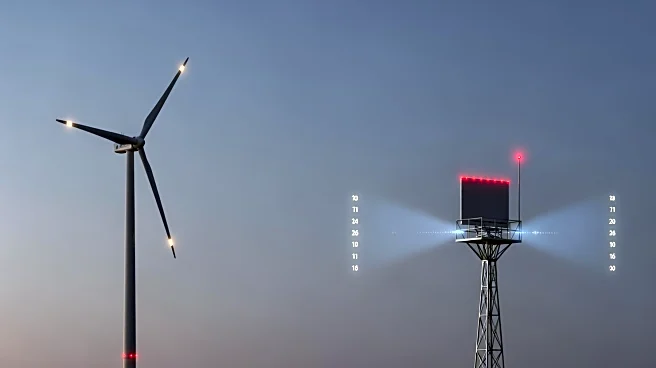
A bill has been advanced by an Iowa House subcommittee that mandates the installation of aircraft detection lighting systems (ADLS) on all wind turbines in the state. This move aims to address complaints from landowners about the constant blinking red
lights on wind turbines, which are considered a nuisance. The bill, introduced by Rep. Dean Fisher, requires new wind farms to be equipped with these sensor-based lights and existing turbines to be retrofitted by 2028. However, lawmakers plan to amend the bill to extend the timeline for retrofitting. The ADLS technology activates lights only when an aircraft is detected, reducing unnecessary light pollution. Utilities in Iowa, such as MidAmerican Energy Company and Alliant Energy Corporation, are already in the process of implementing these systems, with about 27% of turbines equipped so far. The bill has received mixed reactions, with some expressing concerns over the cost implications for consumers.
Why It's Important?
The proposed legislation reflects growing concerns over the environmental and aesthetic impact of renewable energy infrastructure. By addressing light pollution, the bill aims to make wind energy more acceptable to local communities, potentially easing resistance to future projects. The implementation of ADLS could set a precedent for other states, influencing national standards for wind turbine lighting. However, the financial burden of retrofitting existing turbines could lead to increased utility costs for consumers, highlighting the need for a balanced approach that considers both environmental benefits and economic impacts. The bill's progress will be closely watched by stakeholders in the renewable energy sector, as it could affect future regulatory frameworks and investment decisions.
What's Next?
The bill will undergo further amendments to adjust the timeline for retrofitting existing turbines. Utilities will need to coordinate with the Federal Aviation Administration and the Federal Communications Commission to ensure compliance with regulatory requirements, which could delay implementation. The outcome of this legislative process will likely influence similar initiatives in other states, as well as the strategies of utility companies and renewable energy developers. Stakeholders, including environmental groups and industry representatives, will continue to engage in discussions to balance the interests of local communities, energy providers, and consumers.