






What's Happening?
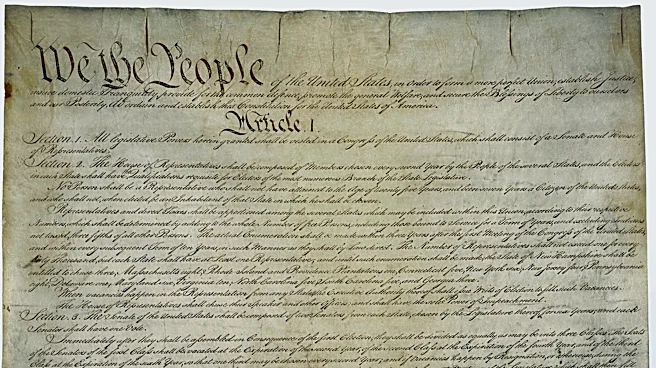
NYU School of Law professor Melissa Murray, in an interview with Fulcrum Contributor Rick LaRue, shared her perspective on the U.S. Constitution ahead of Constitution Day. Murray emphasizes the Constitution's role in creating a government strong enough
to be effective but not tyrannical, highlighting its design as a hedge against government overreach. She points to early Supreme Court cases involving family law and immigrant families as examples of the Constitution fostering pluralism, which she views as essential for democracy. Murray also discusses the motivation behind her book, 'The U.S. Constitution: A Comprehensive and Annotated Guide for the Modern Reader,' citing a perceived lack of civics education and understanding of the document among the public. She notes that many people, including young individuals and public figures, often misunderstand the constitutional limits of governmental power, particularly concerning the presidency and local law enforcement.
Why It's Important?
Murray's insights underscore the critical importance of constitutional literacy in the U.S. political landscape. A lack of understanding regarding the Constitution's framework and the separation of powers can lead to misdirected public expectations and criticisms of elected officials. Her work highlights how historical amendments, such as the Bill of Rights and the Reconstruction Amendments, addressed initial deficiencies, demonstrating the document's capacity for evolution. The Populist/Progressive Era amendments (16th-19th) further illustrate how grassroots activism can drive constitutional change, impacting areas like taxation and direct election of senators. This historical context is vital for understanding how the Constitution has adapted to societal needs and how citizens can engage in shaping its future interpretation and application. The ongoing relevance of these discussions impacts civic engagement and the informed participation of the electorate.
What's Next?
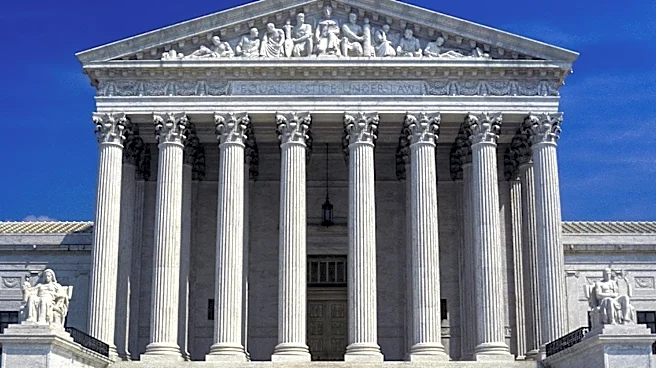
Murray identifies several contemporary constitutional challenges that warrant public attention, including questions about voting rights, minority rule, and the Supreme Court's role in a representative democracy. She specifically mentions the Electoral College as a topic deserving extensive discussion and considers the possibility of amendments for D.C. and Puerto Rico statehood. The current period, marked by what she describes as a 'serious constitutional crisis' due to an imbalance of power among government branches, could potentially spark renewed interest in constitutional amendments. Murray suggests that if the nation successfully navigates these challenges, the 250th anniversary of the country's founding could be a moment to reflect on the enduring idea of limited government. Her work encourages continued public engagement with the Constitution, emphasizing its role as a living document that requires ongoing understanding and debate.
Beyond the Headlines
The discussion delves into the deeper implications of the Constitution's 'incomplete by design' nature, suggesting that its initial imperfections and subsequent amendments reflect a continuous effort to achieve a 'more perfect union.' This perspective highlights the dynamic relationship between the foundational document and societal evolution, emphasizing that the Constitution is not a static text but a framework that has been, and can continue to be, shaped by 'we the people.' The ethical dimension of constitutional interpretation is also evident, particularly in discussions about the Supreme Court's use of the 'shadow docket' and the potential for one branch of government to exercise outsized power. Murray's call for increased civics education points to a cultural shift needed to foster a more informed citizenry capable of grappling with complex constitutional questions and defending democratic principles against potential tyranny.