
What's Happening?
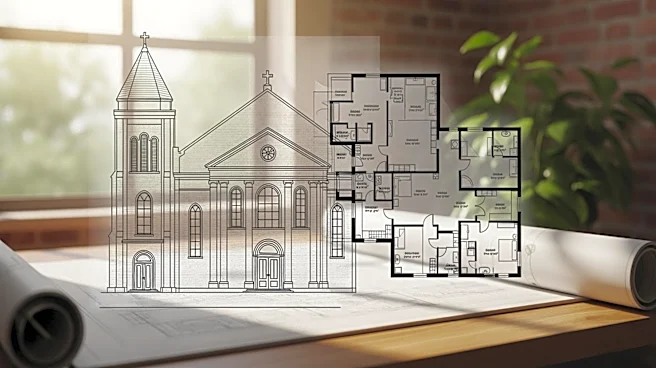
A project to restore the historic St. Augustine’s Chapel on the Lower East Side and construct a 21-story mixed-use development with 130 affordable apartments is advancing. Manhattan Borough President Brad
Hoylman-Sigal has recommended approval of the proposal, which involves renovating the 1820s-era church and replacing a vacant two-story classroom annex. The development will include income-restricted apartments for families earning 50, 80, and 110 percent of the area median income, with some units reserved for formerly homeless individuals. The project, led by Fulcrum Properties, will also feature ground-floor retail and community facility space. The Landmarks Preservation Commission has approved the demolition plan and new tower, and the project is now headed to the City Planning Commission for review.
Why It's Important?
This development is significant as it addresses the pressing need for affordable housing in Manhattan, particularly in the Lower East Side. By integrating historic preservation with new housing, the project serves as a model for similar initiatives in urban areas facing housing shortages. The inclusion of units for formerly homeless individuals highlights a commitment to addressing homelessness. Additionally, the project will generate revenue to maintain the church and its congregation, ensuring the preservation of a historic landmark. The support from local government and community boards underscores the project's potential impact on the community and its alignment with broader urban development goals.
What's Next?
The project will proceed to a pre-public hearing review session at City Planning, followed by a vote. If approved, construction will begin, with stakeholders closely monitoring the project's progress. The development could influence future policies on integrating affordable housing with historic preservation, potentially inspiring similar projects across New York City. Community engagement and feedback will be crucial as the project moves forward, ensuring that it meets the needs of residents and preserves the cultural heritage of the area.