
What's Happening?
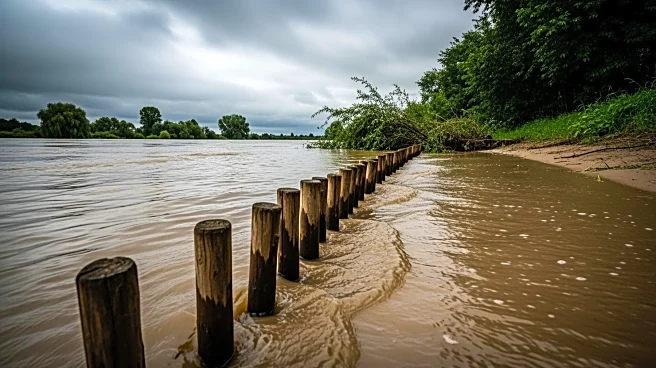
The National Weather Service (NWS) has issued flood warnings for Mississippi, Louisiana, and Washington, effective from January 12, 2026, until further notice. In Mississippi, the Chickasawhay River at Leakesville
is expected to rise to 22.5 feet, surpassing the flood stage of 20 feet, affecting George and Greene Counties. The Leaf River near McLain is also forecasted to crest at 22 feet, impacting Perry, George, and Greene Counties. In Louisiana, the Tangipahoa River near Robert is predicted to rise to 18 feet, affecting roads and low-lying areas. The Tickfaw River near Montpelier is expected to breach its banks, prompting warnings for farmers to move livestock to higher ground. In Washington, the Skokomish River at Potlatch is anticipated to reach 17.5 feet, causing moderate flooding in Mason County. Residents in all affected areas are advised to remain vigilant and monitor local forecasts.
Why It's Important?
The flood warnings highlight the ongoing challenges posed by extreme weather events, which can lead to significant disruptions in daily life and economic activities. In the affected states, infrastructure such as roads and bridges may be compromised, impacting transportation and logistics. Agricultural sectors could face losses due to inundated farmlands, affecting local economies and food supply chains. The warnings also underscore the importance of preparedness and timely response to mitigate the impact of natural disasters. Communities in low-lying areas are particularly vulnerable, and the warnings serve as a critical reminder for residents to take necessary precautions to protect life and property.
What's Next?
As the situation develops, local authorities and emergency services will likely continue to monitor river levels and provide updates to the public. Efforts to reinforce flood defenses and implement evacuation plans may be necessary if conditions worsen. The NWS will continue to issue forecasts and warnings to guide residents and local governments in their response efforts. Long-term, these events may prompt discussions on infrastructure resilience and climate adaptation strategies to better prepare for future extreme weather events.