








What's Happening?
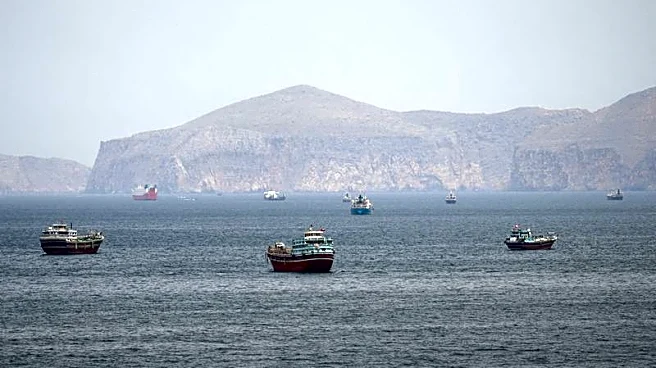
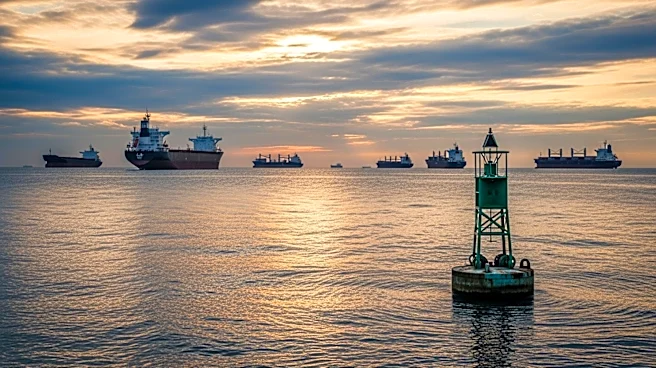
The shipping industry is experiencing significant strain as hundreds of vessels and approximately 20,000 seafarers remain trapped in the Gulf region due to the ongoing conflict affecting the Strait of Hormuz. Despite a ceasefire, renewed hostilities have
kept the strait largely closed, preventing ships from leaving without safety assurances. V.Group, a major global ship manager, has 13 ships stuck in the Gulf, with half being tankers. The company's CEO, Rene Kofod-Olsen, emphasized the need for international guarantees of safe passage before shipping can resume normal operations. The situation has led to irregular operational frameworks, posing challenges for ship owners and insurers. Shipping executives, gathered in Athens, highlighted the deepening strain on crews and the need for a balanced risk assessment by ship owners.
Why It's Important?
The closure of the Strait of Hormuz, a critical maritime chokepoint, has significant implications for global trade and energy supply, as it is a major route for oil and gas shipments. The ongoing conflict and the inability to ensure safe passage for vessels could lead to disruptions in the supply chain, affecting global markets and potentially increasing energy prices. The situation also poses risks to the safety and wellbeing of seafarers, who are caught in a conflict zone. The shipping industry, insurers, and international stakeholders must navigate these challenges to mitigate economic and human impacts. The need for international cooperation to ensure safe passage highlights the geopolitical complexities involved in resolving the conflict.
What's Next?
For the shipping industry to return to pre-conflict operations, international stakeholders must provide solid assurances of safe passage through the Strait of Hormuz. This may involve diplomatic efforts to stabilize the region and establish clear safety protocols. Ship owners will need to assess risks carefully and make informed decisions about operating in the Gulf. The international community's involvement will be crucial in facilitating a resolution that allows for the safe and efficient movement of vessels. Continued monitoring of the situation and adaptive strategies will be necessary to address the evolving challenges faced by the shipping industry.