






What's Happening?
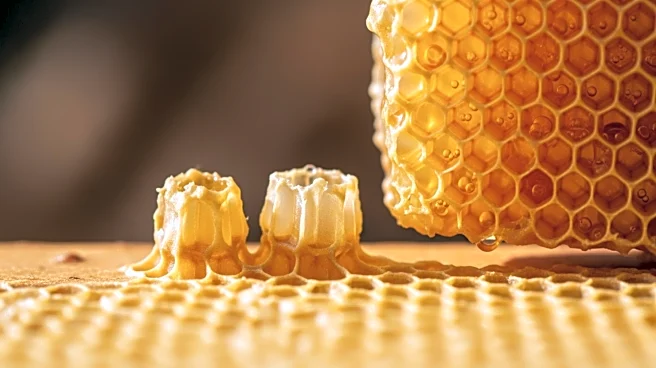
In Southern California, a unique hybrid honeybee population has shown remarkable resilience against Varroa mite infestations, a major threat to global agriculture. These honeybees, crucial for pollination, have been under siege from these parasitic mites,
leading to significant colony losses. However, the hybrid bees in California have demonstrated a 68% reduction in mite infestation compared to commercial breeds. This resilience is attributed to genetic diversity from multiple honeybee lineages, offering hope for apiculturists and ecological scientists.
Why It's Important?
The resilience of these hybrid honeybees is significant for the U.S. agricultural sector, which relies heavily on pollination services. Varroa mites have been a major factor in honeybee colony collapses, threatening food supply chains. The discovery of naturally resistant bee populations could reduce dependency on chemical treatments, promoting environmental sustainability and enhancing food security. This research could lead to new breeding programs focused on enhancing mite resistance in honeybees.
What's Next?
Researchers plan to further investigate the genetic, behavioral, and chemical signals that contribute to the hybrid bees' resistance to Varroa mites. This could lead to the development of new pest management strategies that prioritize biological resilience. The findings may influence future breeding programs aimed at propagating these traits to enhance honeybee populations globally.
Beyond the Headlines
This discovery highlights the potential of natural adaptation mechanisms in addressing ecological challenges. It underscores the importance of integrating empirical knowledge from field practitioners with advanced research methodologies to develop sustainable solutions for pollinator health and agricultural sustainability.