
What's Happening?
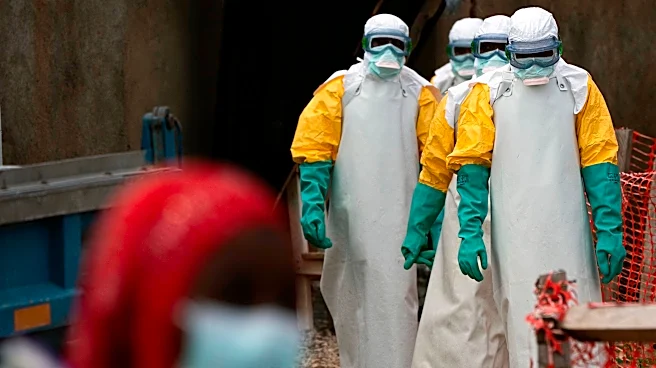
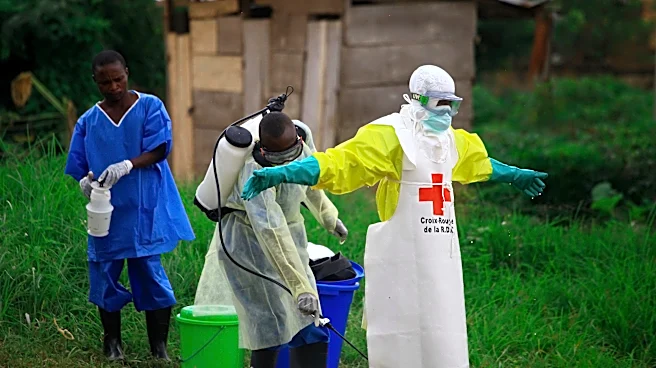
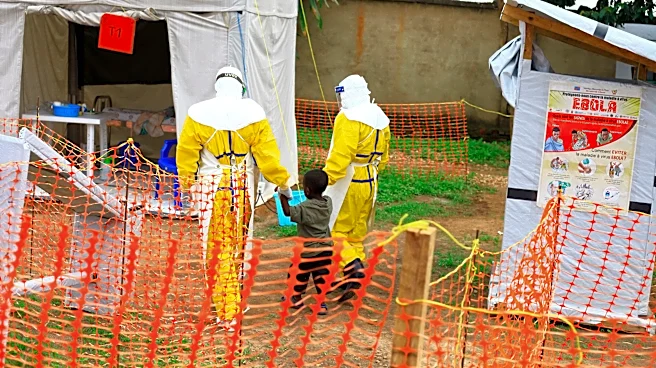
A significant Ebola outbreak in the eastern Democratic Republic of the Congo has resulted in at least 80 fatalities, prompting a U.S. travel advisory for the affected region. The outbreak, confirmed to
be of the Bundibugyo strain, poses a challenge as existing vaccines and treatments are less effective against this variant. The Congolese Health Minister, Samuel-Roger Kamba, reported that while only eight cases have been laboratory-confirmed, the actual number of cases is likely much higher due to late identification and untested cases. The outbreak is centered in Ituri province, which borders Uganda, and has already led to a confirmed case in Uganda, heightening concerns of cross-border transmission. The World Health Organization (WHO) and Africa CDC are actively involved in containment efforts, deploying resources and personnel to the region.
Why It's Important?
The outbreak's significance extends beyond the immediate health crisis, as it poses a potential threat to regional stability and public health security. The U.S. travel advisory underscores the risk of international spread, which could have broader implications for global health systems already strained by other health emergencies. The situation is particularly concerning given the region's challenges, including insecurity and limited healthcare access, which complicate containment efforts. The outbreak's potential to spread across borders could lead to increased travel restrictions and economic disruptions, affecting trade and mobility in the region. Additionally, the less common Bundibugyo strain's resistance to existing treatments highlights the need for ongoing research and development of more effective medical interventions.
What's Next?
Health agencies, including the WHO and Africa CDC, are intensifying efforts to contain the outbreak, focusing on active case finding, contact tracing, and community engagement. The next few weeks are critical in determining whether the outbreak can be stabilized. The U.S. Embassy in Uganda has advised Americans to avoid travel to the affected areas and to monitor their health if they have recently traveled there. The situation requires close monitoring, as further spread could necessitate additional international response measures and potentially impact global travel and trade.