





What's Happening?
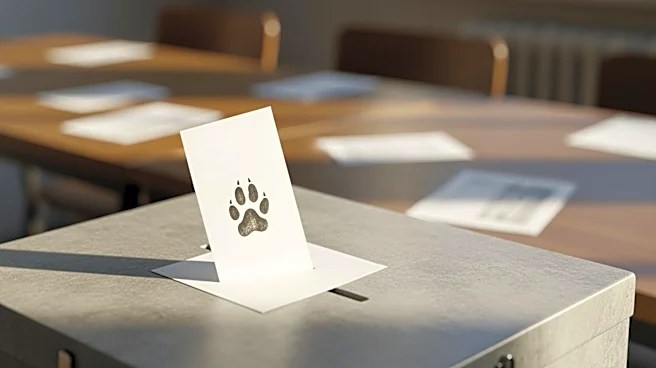
Laura Lee Yourex, a 63-year-old resident of Costa Mesa, California, has pleaded guilty to a misdemeanor charge for knowingly registering her dog to vote. This action was part of her attempt to expose perceived vulnerabilities in the election system. The
plea deal resulted in the dismissal of more severe felony charges, including perjury and offering a false document. Yourex's actions included casting ballots in her dog's name during the 2021 gubernatorial recall and the 2022 primary elections. The Orange County district attorney's office confirmed these illegal activities. Yourex's attorney stated that her client intended to demonstrate flaws in the voting system, hoping to prompt improvements. The case was brought to light when former Huntington Beach City Attorney Michael Gates reported the incident to the Orange County Registrar of Voters, who then referred it to the district attorney for investigation.
Why It's Important?
This case underscores the ongoing debate about the integrity and security of the U.S. voting system. While Yourex's actions were illegal, they were intended to highlight potential weaknesses in voter registration processes. The incident has sparked discussions about the effectiveness of current checks and balances in preventing voter fraud. Despite the rarity of such cases, the prosecution of Yourex serves as a reminder of the system's ability to detect and address fraudulent activities. Legal experts, like Chapman University law professor Nahal Kazemi, argue that the case demonstrates the system's robustness, as the fraudulent vote was eventually flagged and rejected. This incident may influence future policy discussions on election security and voter registration processes.
What's Next?
Laura Lee Yourex is scheduled to be sentenced on October 16. The outcome of her sentencing could set a precedent for similar cases in the future. Additionally, this case may prompt election officials and lawmakers to review and potentially tighten voter registration and verification processes to prevent similar incidents. The public and policymakers may also engage in broader discussions about the balance between ensuring election security and maintaining accessible voting systems.