






What's Happening?
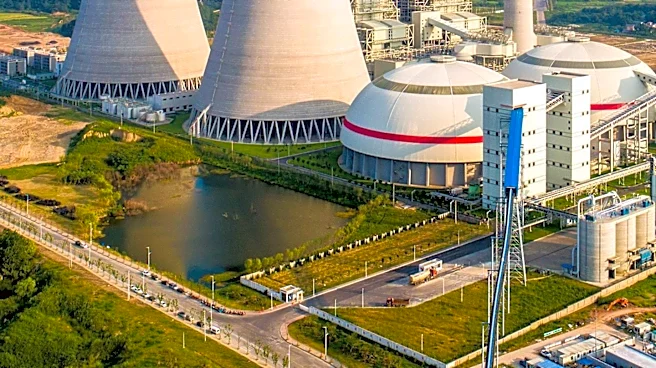
China has set a target to build around 100 national-level zero-carbon industrial parks as part of its 15th Five Year Plan. These parks aim to achieve net-zero or close to zero carbon emissions, particularly in hard-to-abate sectors like steel, cement,
and chemicals. The initiative is part of China's broader decarbonization strategy and could potentially influence global industrial supply chains. Analysts are considering whether China's model could be applied overseas, especially in countries involved in the Belt and Road Initiative. The development of these parks is seen as a national priority, with a focus on competitiveness and industrial upgrading.
Why It's Important?
The establishment of zero-carbon industrial parks in China represents a significant step towards reducing industrial emissions, which account for a substantial portion of the country's carbon footprint. This initiative could serve as a blueprint for other countries looking to decarbonize their industrial sectors. The global application of this model could lead to cleaner supply chains and help countries meet international climate commitments. Additionally, the focus on renewable energy within these parks could drive technological advancements and economic growth in participating regions.
What's Next?
China's approach to zero-carbon industrial parks may inspire other countries to adopt similar strategies, particularly those involved in the Belt and Road Initiative. The success of these parks will depend on the ability to unify standards and carbon accounting systems. As China continues to develop these parks, there may be increased collaboration with international partners to share best practices and technologies. The global expansion of this model could lead to significant reductions in industrial emissions worldwide.