







What's Happening?
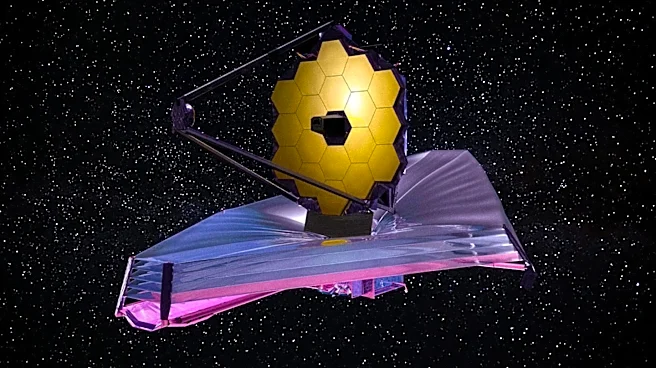
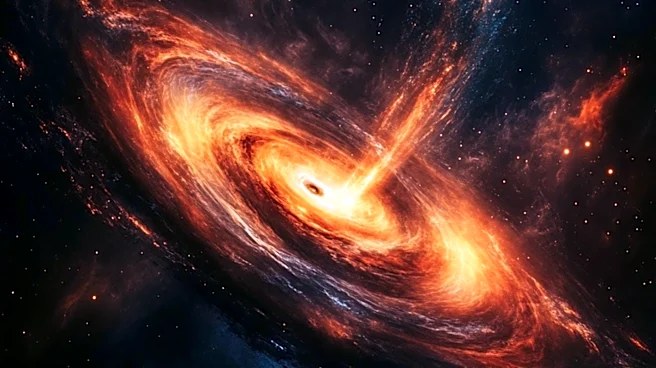
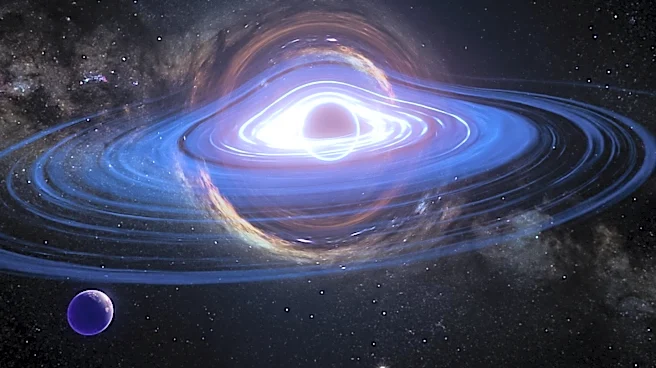
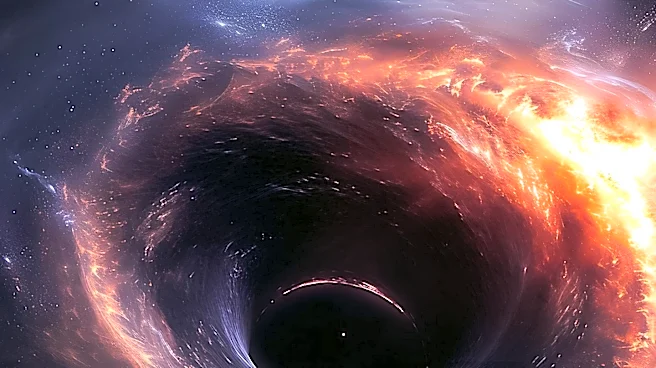
The Hubble Space Telescope, in collaboration with the James Webb Space Telescope, has identified the first stellar-mass black hole in the massive globular star cluster Omega Centauri. This discovery was made using over 20 years of archival data from Hubble,
complemented by recent observations from the James Webb Space Telescope. The black hole, named oMEGACat BH-2, is part of a binary system with a visible star, whose orbital path was meticulously charted by astronomers. The findings, published in The Astrophysical Journal Letters, provide new insights into black hole formation within such dense star clusters.
Why It's Important?
This discovery is significant as it refines existing theories on black hole formation in globular clusters, which are densely packed with stars. Understanding the dynamics of such systems can offer insights into the evolution of galaxies and the role of black holes in these processes. The identification of oMEGACat BH-2 as the longest-period black hole binary known to date suggests that such systems may form dynamically, providing a new perspective on the interactions within star clusters. This could impact future research on stellar evolution and the lifecycle of black holes.
What's Next?
The discovery opens avenues for further research into the dynamics of globular clusters and the role of black holes within them. Future observations using advanced telescopes like the James Webb Space Telescope could provide more detailed data on similar systems, enhancing our understanding of the universe's structure. Additionally, this finding may prompt a reevaluation of existing models of black hole formation and encourage the search for more such systems in other star clusters.