
What's Happening?
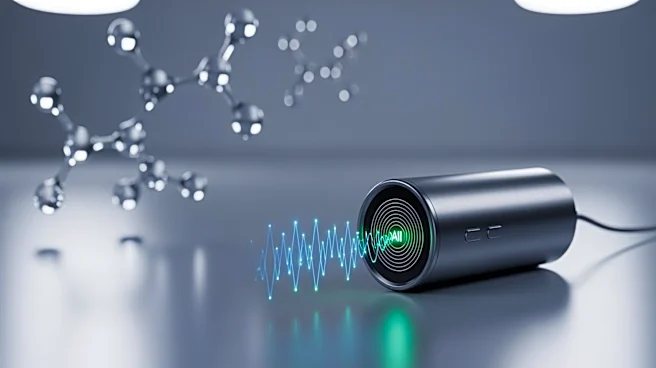
A research team from the Korea Advanced Institute of Science and Technology (KAIST) has developed a novel artificial intelligence biosensor capable of detecting the stress hormone cortisol. Utilizing a deep
learning-driven protein structure generation and sequence design method, the team designed small molecule-binding proteins with high specificity. The proteins were transformed into sensors that can selectively recognize cortisol, addressing a significant challenge in protein design. This advancement moves beyond traditional methods that relied on natural protein screening and modification, offering a scalable and universal approach to biosensing technology.
Why It's Important?
The development of this AI-driven biosensor has significant implications for various fields, including disease diagnosis, drug development, and environmental monitoring. By enabling precise detection of cortisol, the biosensor could improve diagnostic accuracy for conditions like Cushing's syndrome, where cortisol levels are a critical marker. The technology also represents a shift towards customizable protein design, potentially accelerating the development of new therapeutic agents and environmental sensors. This innovation underscores the growing role of AI in enhancing the specificity and functionality of biosensors, which could lead to more efficient and targeted applications in healthcare and beyond.
What's Next?
Future research may focus on optimizing the biosensor's selectivity for structurally similar molecules and improving its application in real-world scenarios. The team might explore expanding the biosensor's capabilities to detect other small molecules, broadening its utility across different industries. Additionally, collaborations with healthcare and pharmaceutical companies could facilitate the integration of this technology into existing diagnostic and therapeutic frameworks, potentially leading to new commercial products and services.