



What's Happening?
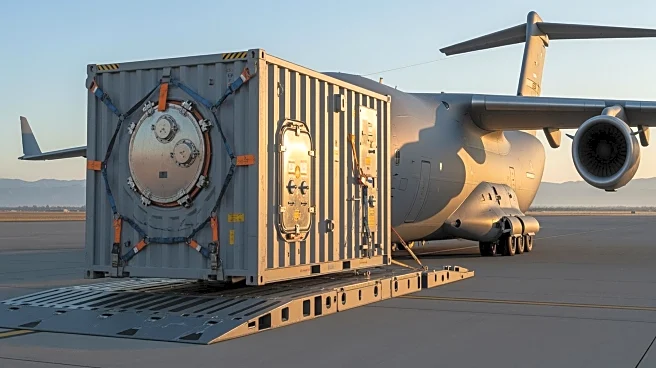
The U.S. military, in collaboration with the Department of Energy, has successfully airlifted a small nuclear reactor from March Air Reserve Base in Riverside County, California, to Utah. This marks the first time a nuclear reactor has been transported
by air, highlighting the Trump administration's push to promote nuclear energy as a reliable power source. The reactor, a 5-megawatt microreactor without nuclear fuel, was transported aboard a C-17 military aircraft. Energy Secretary Chris Wright and Undersecretary of Defense Michael Duffey emphasized the potential of microreactors to meet the growing power demands of artificial intelligence, data centers, and military operations. Despite the administration's enthusiasm, critics have raised concerns about the safety and feasibility of deploying microreactors.
Why It's Important?
The airlift of the nuclear reactor underscores the Trump administration's commitment to expanding nuclear energy as part of the U.S. energy strategy. Nuclear power is seen as a carbon-free source of electricity, which could play a crucial role in meeting the country's energy needs. However, the initiative has sparked debate over the safety and economic viability of microreactors. The administration's decision to bypass the Nuclear Regulatory Commission in approving reactor designs has also raised questions about regulatory oversight. The successful deployment of microreactors could enhance energy security for military bases and provide a new avenue for civilian energy supply, but it also necessitates addressing safety concerns and waste disposal challenges.
What's Next?
The microreactor transported to Utah will undergo testing and evaluation at the Utah San Rafael Energy Lab. The administration plans to have the reactor reach 'criticality' by July 4, as part of a broader effort to accelerate nuclear power deployment. The Energy Department is in discussions with states to establish sites for reprocessing fuel and handling nuclear waste. The outcome of these initiatives will depend on the administration's ability to address safety concerns and demonstrate the economic benefits of microreactors. The success of this project could pave the way for further development and commercialization of portable nuclear reactors.