


What's Happening?
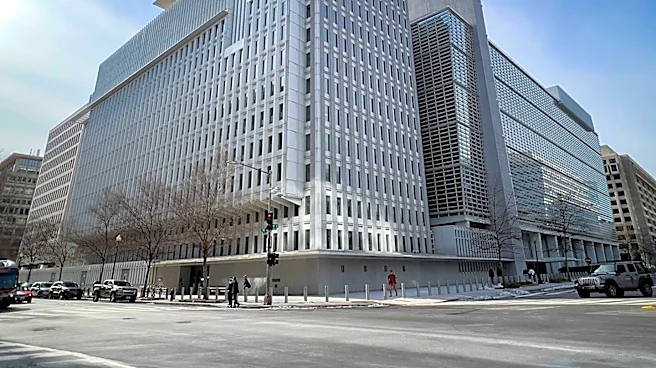
The World Bank, an international financial agency with significant U.S. backing, is seeking consultancy services for its Transport Corridors for Economic Resilience Mozambique SOP 2 Project. This initiative focuses on assessing climate vulnerability along
the Nacala Corridor and supervising civil works. The United States, a founding member and the largest shareholder of the World Bank since 1944, plays a crucial role in the organization's operations. The World Bank provides loans and grants to governments in low- and middle-income countries for capital projects. U.S. priorities within the World Bank include addressing global health and economic responses to crises like COVID-19, promoting debt sustainability and transparency, combating corruption, ending energy poverty, and emphasizing accountability and development impact. This specific project in Mozambique aligns with broader efforts to enhance economic resilience in developing nations.
Why It's Important?
This consultancy project is significant as it underscores the World Bank's commitment, supported by the U.S., to sustainable development and climate resilience in vulnerable regions. The Nacala Corridor is a vital economic artery in Mozambique, and assessing its climate vulnerability is crucial for ensuring the long-term viability of infrastructure and economic activities in the region. The U.S.'s continued support for the World Bank, particularly through the International Development Association (IDA), highlights its dedication to assisting the world's poorest countries. By investing in such projects, the U.S. aims to foster global stability, mitigate climate risks, and promote economic growth in developing nations, which can have indirect benefits for international trade and security. The project's focus on climate vulnerability also reflects a growing global recognition of the need to integrate climate considerations into development planning.
What's Next?
The immediate next step involves the selection of a consultancy firm to conduct the climate vulnerability assessment and supervise civil works along the Nacala Corridor. Following the assessment, the project will likely proceed with implementing recommended measures to enhance the corridor's resilience to climate change impacts. This could involve infrastructure upgrades, new construction techniques, or policy adjustments to protect the corridor from extreme weather events. The World Bank, with U.S. oversight and funding, will continue to monitor the project's progress and impact. Future developments may include further investments in similar climate resilience projects in other vulnerable regions, as the U.S. and the World Bank maintain their focus on sustainable development and climate adaptation as key international priorities.
Beyond the Headlines
Beyond the immediate scope of infrastructure development, this project touches upon broader themes of international cooperation, climate justice, and sustainable economic development. The U.S.'s role as a leading force in the World Bank signifies its influence in shaping global development agendas, particularly in addressing climate change impacts in developing countries that often bear the brunt of environmental shifts despite contributing less to the problem. This initiative also highlights the complex interplay between economic development and environmental sustainability, demonstrating how infrastructure projects must now integrate climate resilience to be effective and long-lasting. The success of such projects can serve as a model for future international collaborations aimed at building a more resilient global economy in the face of escalating climate challenges.